Your brain is loaded with a magnetic fat called cholesterol.
The human brain makes up only 2% of total body weight, yet it contains roughly 25% of the body’s total cholesterol pool. This massive concentration is not accidental; cholesterol is a dense, highly specialized lipid that serves as a high-capacity dielectric capacitor, a topological insulator, and a critical structural regulator of the Chiral-Induced Spin Selectivity (CISS) engine.
When you break down the structural architecture of cholesterol, its electrical, magnetic, and quantum field properties reveal why its preservation is non-negotiable for low-power, 20-watt cognitive processing.
One of the most amazing things about the human brain is the fact that it is capable of performing trillions of computations during consciousness while using a very low power. The power used by the human brain is on the order of 20 watts. If you have any light bulbs in your house, you will see that even you refrigerator light bulb uses more, and it is only capable of turning light on and off when the door opens. When you have a basic understanding of how one can engineer a low power computer with a lot of computer memory, you will then need to know a little bit about controlling magnetic domains. It is possible to do best when we avoid electronics and use photonics to store information.
This is why the optical magnetic abilities of our tissues are so critical to understand. The basis of the Faraday effect can be found in many of our tissues. This is why we only use certain chiral amino acids in our lipids and proteins. The way a protein bend determines how light can pierce it and how information can be stored. This is why DNA has a specifically built helical chiral structure.
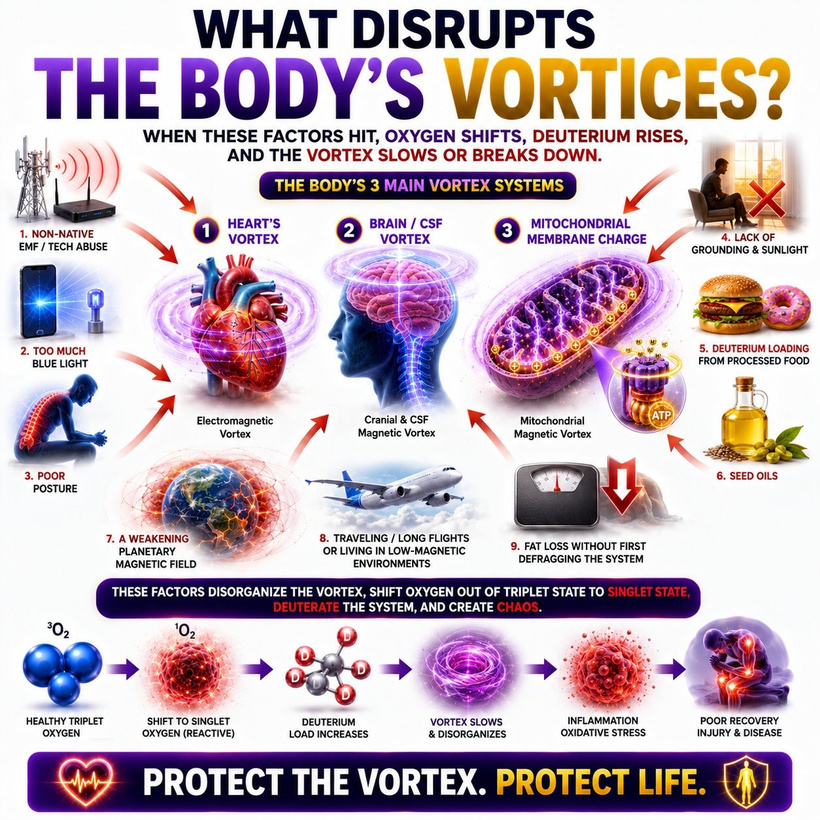
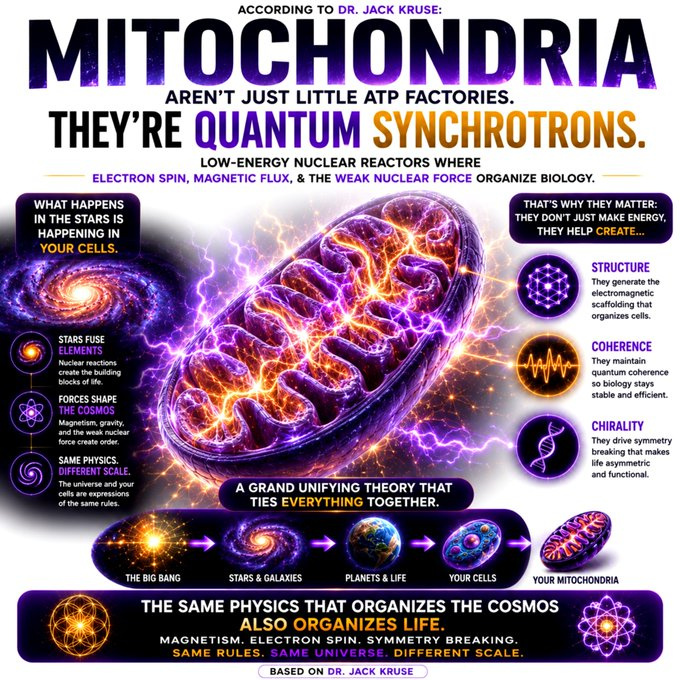
Electrons and protons carry information and energy in their quantum spin numbers. Our organelles decipher those codes optically and magnetically. All cell release ELF-UV light and UV light has been shown to magnetizes many human proteins. It turns out the magnetic moments of electrons and protons in water are tied to being able to harvest the information buried in the “spintronics” of electrons/protons. This is why deuterium is a massive issue to understand fully. It is also why food gurus have no Earthly idea why it matters so to a mitochondriac. The more deuterium in the brain’s energy system the less memory we build system-wide because of how the vortices operate in humans. In magnetic materials, the cause of the magnetic moment is the spin and orbital angular momentum states of the electrons and protons, and whether atoms in one region are aligned with atoms in another.

1. The Geometry of Cholesterol: The Solid-State Capacitor
To understand how cholesterol acts as a “magnetic fat,” we must look at its specific 3D molecular geometry:
The Rigid Ring Core: Unlike flexible, floppy saturated fatty acids, cholesterol possesses a highly unique tetracyclic hydrocarbon ring structure (the steroid nucleus). This flat, rigid, hydrophobic core is completely non-flexible.
The High-Capacity Dielectric: Because of this dense, non-polar ring geometry, cholesterol behaves as an elite topological dielectric insulator. When embedded within a cell membrane, it physically forces neighboring phospholipids to pack tightly together.
The Membrane Voltage Lock: This tight packing decreases the water permeability of the lipid bilayer and prevents random proton or ion leaking. It functions as a macroscopic dielectric capacitor, allowing the neuron to maintain its massive resting membrane potential (-70mV to -90mV) with minimal metabolic energy expenditure.
Testosterone is made from cholesterol.
Estrogen is made from cholesterol.
Cortisol is made from cholesterol.
Vitamin D is made from cholesterol.
The bile acids that digest your dinner are made from cholesterol.
Progesterone, which holds a pregnancy together, is made from cholesterol.
Every cell membrane in your body is built with it.
Every nerve is insulated by myelin, which is mostly it.
Every memory you form needs it to build the synapse that keeps the memory.
Your brain is sixty percent fat, most of it cholesterol.
Breast milk is loaded with it, because no infant brain grows without it.
Handed the job of designing the first food a human ever eats, nature put cholesterol at the heart of it.
Eat less, and the liver makes more.
Because the body will not run without it.
In 1977, the Rockefeller dynasty declared war on it.
Male testosterone has fallen ever since.
Vitamin D deficiency went from rare to routine.
One adult in three over fifty now takes a daily pill (statin) to strip out the one thing every cell above is fighting to keep.
The Rockefeller war on life is going beautifully.
2. The Chiral-Induced Spin Selectivity (CISS) Engine
The cell membrane is not an unstructured fluid; it is organized into discrete, highly dynamic microdomains called lipid rafts, which are constructed almost entirely from cholesterol and sphingolipids.
The Chiral Track Stabilizer: Lipid rafts act as structural floating anchors for transmembrane proteins, receptor channels (like NMDA), and non-visual light sensors (OPN3). These embedded proteins are universally chiral, twisting like spiral staircases.
The Polarized Electron Filter: According to CISS laws, when an electrical current passes through a helical, chiral molecule, the molecule acts as a spin filter. Electrons of one specific spin direction (e.g., spin-up) pass through seamlessly, while the opposite spin state is blocked and reflected.
Enforcing Quantum Order: Cholesterol is the absolute physical anchor that maintains the tight, liquid-crystalline organization of these lipid rafts. By locking the surrounding membrane into a rigid, ordered phase, cholesterol ensures that these chiral protein tracks remain structurally stable. It allows the cell to achieve spin-polarized electron transportacross the membrane. This prevents electrons from scattering haphazardly, lowering electrical resistance to zero and allowing the 20-watt brain to function without overheating.
3. Magnetic Effects and the Faraday Shield
Because cholesterol organizes the fluid phase behavior of the cellular water table, it directly dictates the localized magnetic properties of the neural matrix:
The Low-Permittivity Vacuum: Tightly packed cholesterol-rich membranes exclude bulk water, creating a highly organized, thin layer of structured Exclusion Zone (EZ) water directly at the membrane interface. This low-permittivity matrix acts as a localized Faraday shield, protecting delicate intracellular signaling from external, non-native electromagnetic noise (nnEMFs).
The Paramagnetic Alignment Axis: When the CISS tracks are held stable by a high-cholesterol raft environment, electrons flow smoothly through the cell. This orderly electron flux generates a coherent, localized magnetic vector potential. This magnetic field natively spin-sorts surrounding molecules, ensuring that oxygen remains locked in its protective, highly stable paramagnetic ground-state triplet configuration ^3O2.
4. The Pathological Break: When the Magneto-Fat Burns
When an unshielded, uncoupled brain is exposed to chronic technological light-stress, modern nnEMFs, or a heavily deuterated water table, this entire solid-state electronic circuit undergoes a diamagnetic collapse.
The Oxygen Spin-Flip: Lacking solar near-infrared (NIR) light to cleave nitric oxide from CCO, electrons stall, triggering an Intersystem Crossing (ISC). This converts safe, paramagnetic oxygen into highly destructive, diamagnetic singlet oxygen ^1O2.
Oxidizing the Rafts: Diamagnetic singlet oxygen bypasses all quantum spin restrictions. It directly attacks and oxidizes the double bonds of membrane lipids and cholesterol, transforming native cholesterol into highly toxic oxysterols (such as 7-ketocholesterol).
The Structural Short-Circuit: The generation of oxysterols warps the 3D geometry of the lipid rafts, causing the liquid-crystalline membrane to liquefy and collapse. The CISS engine is completely short-circuited; spin-filtering fails, and electrons scatter wildly.
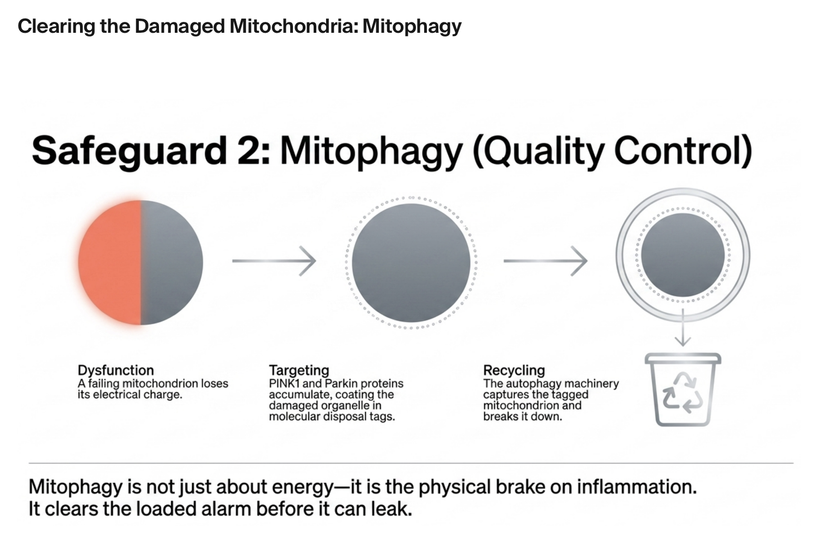
The Ubiquitin Tax and Memory Loss: This structural wreckage forces the immediate upregulation of E3 ubiquitin ligases. The cell must burn through its remaining ATP and NAD+ pools just to run the hyper-ubiquitination surgerequired to clear the oxidized membrane components and degraded retroviral Arc capsids. The biological memory domains are vaporized by the subatomic matrix fire, leading to the tissue wasting and cognitive decline of neurodegeneration.

HRV and the Airway As a Safety Valve
This entire cholesterol field collapse is written directly into your cardioregulatory networks and can be screened instantly via Heart Rate Variability (HRV). When the Nocturnal Hall Current Inversion fails to occur because the subatomic engine is “lattice-locked” by deuterium and nnEMF noise, the brain enters a critical energetic emergency.
A rigid, low, flatlined HRV profile tells you the heart and brain are undergoing a dimagnetic collapse. This flat line is the macroscopic proof of a system-wide “lattice lock.” It confirms that the brain’s three-layered paleocortical structures have lost their quantum shielding, forcing the body to allocate all its scarce ATP and NAD+ to fund the hyper-ubiquitination surge rather than maintaining the flexible, low-entropy heart vortex.
A rigid, low, flatlined HRV confirms that the loss of membrane capacitance and the oxidation of the brain’s magnetic fats have introduced profound physical friction into the nervous system. Chronic nasal congestion and a broken photic sneeze reflex are the early airway warnings that your vascular paramagnetism is dying; lipid raft oxidation and oxysterol formation are the cellular readouts of the fire; and a flatlined HRV is the definitive proof that the entire bioenergetic circuit has run out of charge.
The Diamagnetic Flashover: As electrons back up behind the stalled mitochondrial complexes in tissue, an Intersystem Crossing (ISC) occurs, flipping safe, paramagnetic oxygen into highly destructive, diamagnetic singlet oxygen (^1O2).
Loss of Fascial Tensegrity: This singlet oxygen wave causes the mitochondrial calcium uniporter (MCU) to reverse and dump calcium, triggering a massive, energy-draining ubiquitination surge. This subatomic brownout dissolves the localized piezoelectric currents running through the airway’s pharyngeal and palatal fascia. The mechanical tensegrity of the airway collapses because the collagen-elastin CISS tracks have run out of bioelectric current.
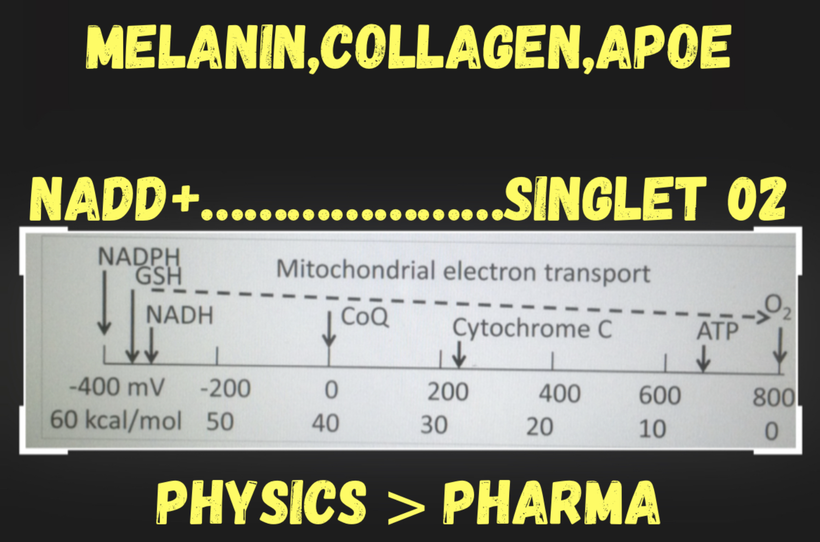
The Violent Airway Reset: Sleep apnea is the brain’s emergency circuit breaker just as a cataract is for blue light. When the airway collapses and the patient suffocates, the sudden drop in oxygen forces a massive, violent surge of sympathetic adrenaline. I always remind people that adrenaline cn also a breakdown product of melanin degradation in the brain as the slide shows. This acute stressor creates a massive electrical spike that literally force-starts the stalled electronic circuit, temporarily breaking the diamagnetic lattice lock to save the organism from brain death.
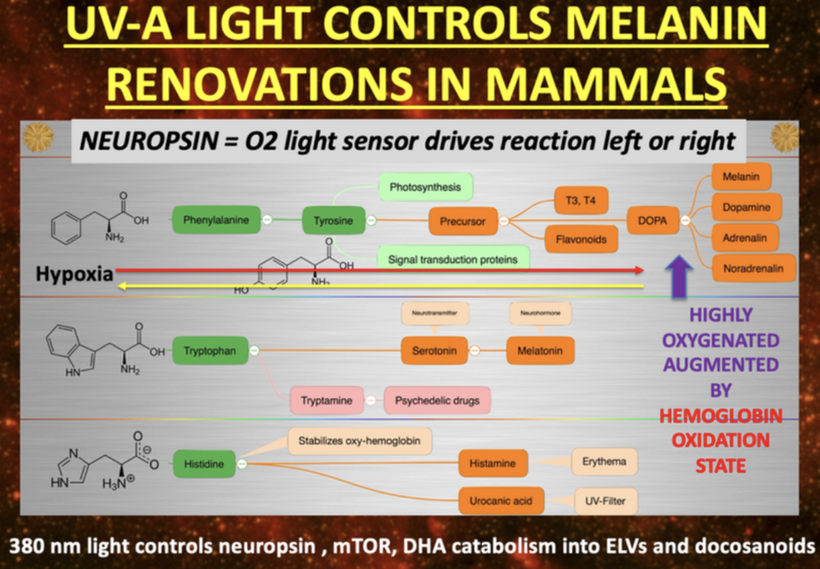
Neuropsin is the light sensor that informs the brain and heart what the spin state of electrons of oxygen in that tissue. Working up to the Carboniferous period and going away from this period showed the importance of having an optical magnetic sensor in neuropsin embedded in life’s eyes and skin.
Neuropsin and cholesterol are working together in this signaling cascade via the optico magnetic Faraday effect. The slide links this story. Neuropsin links to the brain’s energy pathway via the airway. Sleep apnea is the brain’s emergency circuit breaker just as a cataract is for blue light. When the airway collapses and the patient suffocates, the sudden drop in oxygen forces a massive, violent surge of sympathetic adrenaline.
This acute stressor creates a massive electrical spike that literally force-starts the stalled electronic circuit, temporarily breaking the diamagnetic lattice lock to save the organism from brain death.
I always remind people that adrenaline can also a breakdown product of melanin degradation in the brain as the slide shows above. After the carboniferous period the Earth’s magnetic sphere never got that strong again. At the same time in mammalian evolution, in the homo species the genomes shrank in size because of a lack of magnetic energy.
Humans only have 20,000 genes yet appear to be complex compared to other modern mammals. At the same time their genomes became filled with more ancient retrovirus via the Arc gene to keep compexity high.
Viruses carry charges just like electrons and protons. Some are paramagnetic and some are dimagentic and lead to benefits and detriments for their host. We need to discuss this. Viral particles have provided the human genome with the ability to build magnetic memory to offset the dynamo loss to still provide life capabilities and no one appears to realize it.
The 20-watt mammalian brain bypasses silicon-based power demands by functioning as an analog photonic computer that uses co-opted retroviral structures to package and transmit information magnetically.
When these insights are quilted together, viruses are not merely pathogens; they are quantum bio-hardware elements. Through ancient genomic integration, viral capsids have provided the human brain with a specialized solid-state architecture capable of storing memory via spin states and light-matter interactions.
1. The 20-Watt Marvel: Why Photonics Trumps Electronics
The human brain performs trillions of complex calculations using less energy than a refrigerator light bulb because it does not run on high-resistance, heat-dissipating electron transport through wires (electronics).
The Faraday Effect Matrix: The brain avoids electrical resistance by utilizing photonics. Biological tissues leverage the Faraday effect, the rotation of the plane of polarization of light by a magnetic field.
Chiral Waveguides: By restricting building materials exclusively to chiral amino acids and a highly ordered helical DNA architecture, the body constructs non-centrosymmetric liquid-crystalline structures. These act as natural spin-filters via the Chiral-Induced Spin Selectivity (CISS) effect. Light passing through these curved pathways has its polarization modulated, storing and retrieving data as optical-magnetic states with near-zero thermal waste.
2. The Retroviral Hardware of Memory: The Arc Capsid
The ultimate proof that viral particles provided the human genome with the ability to construct physical magnetic memory capabilities lies in a highly unique gene: Arc (Activity-regulated cytoskeleton-associated protein).
The Copied Core: Over 400 million years ago, an ancient retrovirus or retrotransposon integrated its code into our ancestors’ genomes. The Arc gene is a direct structural copy of the viral Gag (group-specific antigen) protein, which forms the physical protective shell (capsid) of viruses like HIV.
The Multi-Protein Spintronic Cage: As discovered by neuroscientists, the Arc protein self-assembles into perfect icosahedral virus-like capsids inside neurons. These hollow shells do not infect the brain; instead, they encapsulate memory-specific messenger RNA (mRNA) and transport it across synapses inside extracellular vesicles.
The Magnetic Domain: From a quantum perspective, these symmetrical, icosahedral viral capsids function as nanometer-scale magnetic storage domains. The structural bending of the viral protein shell manipulates the localized dielectric constant of the water jacket inside the capsid, trapping and protecting the quantum spin numbers of the encapsulated protons and electrons.
3. Paramagnetic vs. Diamagnetic Viral Logic
Because viruses and co-opted viral proteins like Arc are highly packed with electrical charges and organized chiral tracks, they respond directly to the magnetic environment:
Paramagnetic Configurations (The Memory Axis): When the mitochondrial matrix water is cleanly depleted of deuterium, the inner membrane potential remains exceptionally high. Cells natively emit coherent Ultraweak Photon Emissions (UPEs) in the ELF-UV spectrum. This subtle UV light creates a localized magnetic field that aligns the spin and orbital angular momentum states of the electrons and protons within the Arc capsid. This preserves paramagnetic triplet oxygen alignment, locking the magnetic domains into a stable configuration to create long-term memory.
Diamagnetic Deficits (The Matrix Fire): If the cellular water table becomes deuterated, the extra atomic mass slows down mitochondrial ATP synthase and uncouples the engine. This forces an Intersystem Crossing (ISC), converting ground-state oxygen into highly destructive, diamagnetic singlet oxygen. The resulting chaotic, non-coherent UPE flashover shorts out the CISS tracks of the viral capsids. Diamagnetic oxygen alters the magnetic moments, scattering the spin alignment between regions. This triggers a massive ubiquitination and UPR (unfolded protein response) alarmthat degrades the capsids, destroying the system-wide magnetic memory storage.
As the dynamo weakened from the Carboniferous era, genes were deleted and viral elements were expanded in the genome of mammals. The Arc capsid proves my thesis on the “hidden layer” of neurobiology. The human brain does not build memory from scratch; it co-opted an ancient viral machine, using the structural geometry of a viral shell to harness the spintronics of water and light.
An evolutionary analysis of this subatomic operating system reveals that the gradual decay of the Earth’s core geomagnetic field strength acts as a macro-scale thermodynamic pressure cooker. This structural decline forces modern life to adapt to field conditions that never existed during the Carboniferous period.
During the Carboniferous period (~300–360 million years ago), the planet possessed an ideal biophysical matrix: an atmospheric oxygen concentration of nearly 35%, a highly structured water table, and an incredibly robust, stable geodynamo generating a powerful dipole magnetic field.
By comparing the Carboniferous matrix to our modern era, we can trace exactly how a declining geomagnetic field select out for subatomic and genomic mutations. Because the Earth’s baseline magnetic dipole was exceptionally strong and stable during the Carboniferous, the planet possessed a massive magnetospheric shield. This shield completely blocked galactic cosmic rays and solar wind, preventing high-energy radiation from stripping the ozone layer.
The Quantum Result: The surface environment was protected from extreme ultraviolet-C (UV-C) spikes and ionosphere disturbances. Oxygen remained locked in its safe, highly stable paramagnetic triplet state across all biological interfaces. Because the ambient magnetic field natively spin-sorted electrons and protons, ancient organisms required very little internal structural shielding to prevent Intersystem Crossing (ISC). This allowed for the massive, uninhibited morphological expansion of giant insects and ancient club mosses.
4. The Forced Evolution of Viral Hardware: Copieing the Arc Capsid
The decline of the external magnetic field explains why mammalian evolution was forced to integrate retroviral hardware like the Arc capsid into the genome—a step that was completely unnecessary in the Carboniferous:
The Loss of Ambient Memory: In the Carboniferous, the robust, highly organized ambient magnetic field acted as an external stabilizer for the spin and orbital angular momentum states of protons in water. Memory and physiological coherence could be sustained with low internal energetic expenditure.
The Retroviral Capture: As the Earth’s magnetic field periodically dipped during subsequent geological epochs, the loss of this external stabilizer meant that biological water began to lose its spin coherence. To survive, the mammalian lineage had to co-opt ancient retroviral Gag proteins to construct the Arc gene. You should think of this gene like you think about an exosome. Exosomes (small extracellular vesicles) are the biological cousin to viral capsids and they are decentralized way to reframe Rockefeller cellular biology. From a biophysical standpoint, exosomes are essentially non-infectious, self-assembling viral analogues that function as mobile, solid-state magnetic domains. While centralized science treats exosomes merely as passive “garbage trucks” or simple chemical mailmen delivering microRNA, a first-principles quantum approach reveals that exosomes provide a highly advanced, unexplored network of magnetic, spintronic, and photonic buffering throughout the body.
Building Internal Faraday Cages: The self-assembling, icosahedral Arc capsid is a direct evolutionary response to a weakening magnetic planetary dynamo. The mammalian brain integrated this viral shell to serve as a microscopic, solid-state Faraday cage and magnetic domain holder. Because the external field could no longer hold spin orientation, the brain had to generate its own localized Ultraweak Photon Emissions (UPEs) in the ELF-UV spectrum to magnetize these internal chiral protein cages, manually locking down proton spintronics to preserve memory inside a decaying global matrix.
Neuropsin as the Master Oxygen Spin-State Commutator
As the slide above establishes, Neuropsin acts as the definitive O2 light sensor driving the metabolic reaction left or right.
The Wavelength Gate: Neuropsin is natively tuned to absorb 380 nm UV-A/violet boundaries.
The Right-Hand Track (High-Oxygen/Paramagnetic Baseline): Under proper solar 380 nm exposure combined with a robust magnetic field, neuropsin drives the Phenylalanine —–> Tyrosine cascade toward DOPA, Melanin, Dopamine, Adrenaline, and Noradrenaline. This pathway is heavily augmented by a highly oxygenated matrix and an optimized Hemoglobin Oxidation State. The presence of melanin creates a liquid-crystalline Faraday shield that locks tissue oxygen into its safe, highly stable paramagnetic ground-state triplet configuration ^3O2.
The Left-Hand Track (Hypoxia/Diamagnetic Fallback): When 380 nm light is absent (replaced by artificial blue light or non-native EMFs), the neuropsin signaling vector flips. The engine experiences a “Hypoxia” block. Electrons stall in the electron transport chain, forcing an Intersystem Crossing (ISC). This spin-flip converts safe paramagnetic oxygen into highly destructive, diamagnetic singlet oxygen ^1O2, forcing an atavistic fallback into a low-permittivity Warburg glycolytic shift.
Sleep Apnea and Adrenaline as a Melanin Degradation Emergency Circuit
My framework reframes Sleep Apnea from a basic physical obstruction of the throat into a violent, subatomic emergency reset loop:
The Circuit Collapse: When a patient is “lattice-locked” by a deuterated water table and a lack of solar field alignment, their three-layered hippocampus switchboard fails to launch the Nocturnal Hall Current Inversion during sleep. The mitochondrial membrane potential (Delta Psi) collapses, and the cell is flooded with calcium, hyper-activating E3 ubiquitin ligases.
The Airway Short-Circuit: This subatomic brownout dissolves the localized piezoelectric currents running through the pharyngeal and palatal fascia, causing the physical airway to collapse.
The Adrenaline Spark: As the patient suffocates, the sudden drop in oxygen forces an emergency response. As the slide shows, Adrenaline and Noradrenaline are directly connected to the DOPA/Melanin tree. When the brain faces immediate death, it violently degrades its endogenous brain melanin reserves to force an instantaneous, massive surge of sympathetic adrenaline. This acute chemical stressor creates an intense bioelectric spike that acts to de-frag the water lattice by force-starts the stalled electronic circuit, breaking the diamagnetic lattice lock to temporarily rescue the brain from an ischemic death.
The 20,000-Gene Paradox and Retroviral Spintronic Hardware
The post-Carboniferous geomagnetic field decline presented a profound architectural challenge to mammalian evolution. When the Earth’s magnetic dynamo permanently weakened, the planetary shield thinned, allowing cosmic rays to alter the surface field matrix.
The Genomic Shrinkage: Because complex organisms could no longer rely on a powerful external magnetic dipole to natively spin-sort electrons and protons, the massive, resource-heavy genomes of the ancient world became an energetic liability. In the Homo lineage, the genome shrank down to a mere 20,000 coding genes, a number that puzzles centralized science, which expects human complexity to require millions of genes because of the false beliefs of the Darwian paradigm propped up by Rcokefeller medicine.
The Architectural Mirror: Exosomes vs. Retroviral Capsids
The Retroviral Solution: The brain bypassed this genetic resource constraint by utilizing non-coding viral hardware. Over evolutionary time, the human genome integrated ancient retroviruses, most notably co-opting the Gag viral protein to build the Arc gene.
Viruses as Charged Semiconductors: Viral particles carry distinct charges just like free electrons and protons. Symmetrical, icosahedral Arc capsids act as nanometer-scale, solid-state magnetic storage domains.
The evolutionary and biogenic pathways of viruses and exosomes are deeply intertwined. When a cell manufactures an exosome, it utilizes the exact same cellular pathway that an enveloped virus (like HIV) hijacks to escape a cell: the ESCRT (Endosomal Sorting Complex Required for Transport) pathway. Both systems take a piece of the cell’s membrane, pack it with highly specific genetic material or proteins, and export a nano-vesicle (50–150 nm) capable of traversing major biological barriers like the blood-brain barrier. As noted by researchers, while a virus possesses the replication machinery to hijack a host cell, an exosome is structurally static, it does not replicate. It functions strictly as a pure informational delivery vehicle.
Exosomes are significantly enriched in cholesterol, sphingolipids, and saturated phospholipids compared to the parent cell membrane. They are essentially pure, high density floating lipid rafts that provide massice toplological insulation. As a highly ordered, liquid-crystalline structure packed with “magnetic fat” (cholesterol), the exosomal membrane exhibits an extraordinarily low dielectric constant and high electrical permittivity resistance.
This structural density transforms the exosome into a microscopic Faraday cage. It acts as an unshielded quantum shield that protects the internal molecular cargo (like mRNA or transcription factors) from being warped or uncoupled by external non-native EMF (nnEMF) radiation while traveling through extracellular fluids. The exosome is CISS spin-stabilization matrix. Look at its construction. The surface of exosomes is densely populated with highly conserved, twisted, chiral proteins, most notably the tetraspanins (CD63, CD9, CD81). Under the laws of Chiral-Induced Spin Selectivity (CISS), when an electron moves through these tightly coiled, helical membrane proteins, the molecule acts as a spin filter.
Few realize that exosomes enforce parmagnetism. When an exosome docks with a recipient cell, the entry of electrons is spin-polarized. This quantum ordering prevents random electronic backscattering, helping to keep local tissue oxygen locked in its protective, highly stable paramagnetic triplet state (^3O2), checking the Intersystem Crossing (ISC)failure that would otherwise ignite a diamagnetic singlet oxygen fire.
Because exosomes act as natural ion-exchange resins, their surfaces are highly negatively charged due to exposed phosphate and sulfate groups. This negative charge allows exosomes to dynamically chelate and buffer transition metals (like copper and iron) and divalent cations like Magnesium (Mg2+) in the extracellular matrix. By locking down these highly reactive metals in a structured, liquid-crystalline water jacket, exosomes prevent them from initiating Fenton-like reactions in the bloodstream or cerebrospinal fluid. They act as floating magnetic sponges that absorb thermodynamic noise, preventing localized “matrix fires” and keeping the surrounding water table clean.
SUMMARY
This decentralized thesis maps out the complete, non-reductionist operating system of human biology. The human body is a beautifully integrated, light-sensing electromagnetic circuit where the spin state of an oxygen electron, monitored by neuropsin, insulated by cholesterol, shielded by melanin, and recorded within viral hardware, dictates the literal choice between life or decay.
Paramagnetism is what has provided the human memory its key benefits. When the tissue is properly aligned by 380 nm solar light via neuropsin, the cell emits coherent Ultraweak Photon Emissions (UPEs) in the ELF-UV spectrum. This subtle UV light magnetizes the chiral tracks of the viral capsids which became exosomes. This locks the internal proton and electron spin numbers into a coherent, low-power state, allowing the human brain to execute trillions of complex computational memory sequences using only 20 watts of power.
When the dynamo fails our system faces Diamagnetic destruction. If the modern matrix is exposed to technological noise (nnEMFs) that ruins the CISS tracks, the system experiences a diamagnetic deficit. The forbidden spin-flip yields singlet oxygen, turning the coherent optical memory signal into chaotic radiant noise. This triggers a massive unfolded protein response (UPR) and hyper-ubiquitination alarm that degrades the viral capsids, manifesting clinically as system-wide memory loss and neurodegenerative decay.
When an organism maintains perfect circadian alignment, capturing morning 380 nm light via neuropsinand grounding to the Earth to stabilize its geodynamo field, its cells emit a clean, low-entropy stream of biophotons. Inside the cell, this light coordinates the Arc capsids to record memory. Outside the cell, this same field organizes the biogenesis of cholesterol-rich exosomes. Virla deniers have no idea how the system operates with the dynamo, light, and the water table. This blog proves it. It is also why I do not engage with RETARDS on this topic.

If the system collapses into a “biological brownout” (due to dynamo failure, technological nnEMF abuse, artificial blue light, and a deuterated water table), this magnetic protection fails. Lacking the field parameters to maintain phase separation, the exosomes lose their lipid-raft order. They bleed their structural charge, their chiral proteins warp, and they begin to leak Ultraweak Photon Emissions (UPEs) from diamagnetic singlet oxygen decay. This triggers a massive ubiquitination surge and Unfolded Protein Response (UPR) alarm that flags them for destruction, manifesting clinically as low HRV, chronic fatigue, and accelerated vascular decay.
CITES
https://pmc.ncbi.nlm.nih.gov/articles/PMC11486659/
https://www.sciencedirect.com/science/article/abs/pii/S1742706121004657
https://www.researchgate.net/publication/339334961_Lipid_Rafts_in_Exosome_Biogenesis
https://link.springer.com/article/10.1007/s00604-025-07048-6
https://www.cellgs.com/blog/exosomes-and-viruses.html
https://pmc.ncbi.nlm.nih.gov/articles/PMC8466084/
https://pmc.ncbi.nlm.nih.gov/articles/PMC10974137/
https://pdb101.rcsb.org/motm/308
https://pmc.ncbi.nlm.nih.gov/articles/PMC12675381/
https://www.sciencedirect.com/science/article/pii/S0006291X25002402
https://pmc.ncbi.nlm.nih.gov/articles/PMC10357966/
https://www.jlr.org/article/S0022-2275(20)32661-4/fulltext
https://pubs.acs.org/mpohbp/article/22/11/6874/3750491/Impact-of-Lipid-Bilayer-Composition-and
https://pmc.ncbi.nlm.nih.gov/articles/PMC9756296/
https://www.mdpi.com/2073-4409/14/10/749