Imagine this: Life didn’t spark from a fragile genetic code scribbled in some primordial puddle. No, it ignited in a blazing forge of cosmic radiation, where the Sun’s deadly ultraviolet and ionizing rays hammered the early Earth. Forget the textbook story that photosynthesis came first. Long before any cell learned to split water with gentle visible light, our planet was a radiation-blasted hellscape, with no ozone shield, no mercy from the ‘Cosmic VUV Forge’ that scorched the Archean surface.
Yet in that inferno, something extraordinary emerged; abiotic atoms self-organized into proto-melanin-like polymers, tough, ‘dirty’ pigments born from simple aromatics and phenols, polymerized by brutal UV catalysis, no enzymes required. These weren’t just passive shields. They were the planet’s first energy harvesters.
Enter radiosynthesis, a form of metabolism that thrives on high-energy ionizing radiation, flipping gamma rays and VUV into usable chemical power through electronic transitions in melanin-like structures. This is one of the first lies of omission of Rockefeller curriculums in centralized medical training of MDs/PhD’s.
HOW DO WE KNOW THEY LEFT OUT THE TRUTH?
Fast-forward to today: we see the proof alive and thriving in Chernobyl’s infamous ‘black fungi’ like Cryptococcus neoformans. These melanized marvels don’t just survive radiation, they grow faster toward its source, converting gamma rays into metabolic fuel, a living echo of radiosynthesis in action. This flips the origin-of-life script on its head. The first ‘metabolism’ wasn’t gene-driven; it was a radiative-shielding-to-energy-conversion system.
Melanin-like polymers acted as quantum buffers, stable, conductive, free-radical-rich scaffolds that protected fragile iron-sulfur clusters (the ancient precursors to ferredoxins and the electron transport chain) from the very radiation they were harvesting. No DNA blueprint was needed. No proteins. Just physics meeting chemistry in a brilliant, pre-genetic dance.
And here’s where it gets even more mind-blowing: fast-forward billions of years to mammals, and we find POMC, the proopiomelanocortin gene, as perhaps the single most elegant biophysical masterstroke in our evolutionary story placed on chromosome 2.
Melanin’s were absorbed into proto-cells then codified into a gene to be modified to work in environments not as harsh as the Archean Earth. This one gene encodes a polyprotein precursor that gets cleaved into a cascade of vital hormones and neuropeptides (like ACTH, α-MSH, β-endorphin), orchestrating everything from stress response and pigmentation to appetite control and pain relief. Its evolution wasn’t random; it was a genius repurposing of ancient melanin-linked pathways into a centralized command center for mammalian survival and adaptation. POMC didn’t just build on the past, it brilliantly amplified and integrated those primordial radiation-harnessing tricks into the complex, gene-regulated world we inhabit today.
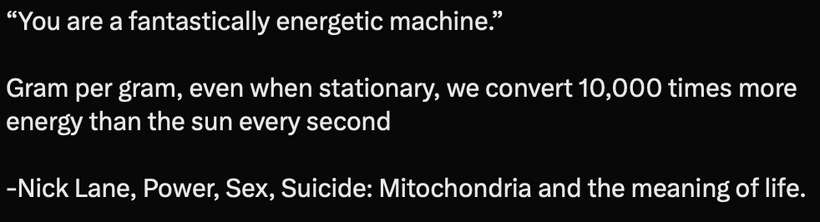
My thesis has shown that the human is a Fantastic Machine that carries the entire history of the Earth’s relationship with the Sun in its melanized circuits. We are not a “product” of evolution; we are the persistence of the flow.
I’ve mentioned that melanin, like ferredoxins, were made without genes. This is a critical insight into metabolism-firsttheories. Melanin is essentially a CHIRAL disordered, stable free-radical polymer. In the Archean “soup,” high-energy VUV light would have catalyzed the oxidative polymerization of simple aromatics into melanin-like pigments without the need for complex protein/enzyme machinery, like Tyrosinase. MDs & PhDs do not know this. They were never taught it. This “dirty” melanins of the Archean would provide a stable, conductive substrate. It would act as a quantum buffer, protecting early iron-sulfur clusters (the precursors to ferredoxins and the ETC) from being shredded by the same radiation it was harvesting.

Why did POMC become the most important gene in the mammalian tree, also, its evolution was brilliant stroke of biophysical evolutionary history. The gene is translated by UV light into its peptide actions. That light can be exogenous or endogenously transformed via UPEs. This goes back to the key event for mammalian biology in their 320 million year lineage on Earth. The event happened 66 million years ago when the sun turned off for a period of time and everything that could not tell time without the sun died.
The KT event was “Blackhole Sun” for the old guard of life forms on Earth that spanned the Cambrian even to the KT event. The gene’s sequence and function are ridiculously stable across mammals because of its pleiotropic roles = mutations are often severe or lethal.
POMC is wired into light and environmental sensing from way back, we’re talking hundreds of millions of years, long before indoor blue light messed with it. And as our CLIP/UV/autoimmunity angle shows, the gene’s conservation underscores how sensitive the system is to modern mismatches.
THE FEYMAN VIDEO ENTERS THE LESSON
Over four billion years ago, in the primordial oceans of an anoxic Earth, water’s anomalous properties, stemming from its dynamic hydrogen bonding network, laid the foundation for life’s emergence by creating melanin to protect the surface from the electromagnetic spectrum. Unlike typical liquids, water expands upon freezing, allowing ice to float and insulate aquatic environments; it boasts an unusually high boiling point and specific heat capacity, moderating temperatures for stable chemical reactions; and its exceptional solvent ability dissolves diverse substances, fostering the “dirty chemistry” of early seas.
These traits, including high surface tension for capillary action and quantum effects like proton tunneling, created a versatile medium where complex molecules could thrive.Amid this, melanin evolved as a pivotal pigment, interacting intimately with water’s anomalies. Functioning as an energy transducer, melanin harnessed light to split water molecules into hydrogen and oxygen, predating photosynthesis in a process akin to radiosynthesis, the ancient harnessing of radiation for energy. This not only chelated heavy metals and atoms abundant in the oxygen-scarce Great Oxidation Event (GOE) era, detoxifying the environment, but also established a self-regulating cycle that generated direct current (DC) electricity as a collateral effect. The universe is economical with the use of her ideas. In these early oceans, melanin’s ability to absorb and transduce energy helped bridge inorganic and organic worlds, paving the way for photosynthesis and later mitochondrial respiration, upon which all modern life depends.
HOW DID MELANIN BEGIN TO CLEAN THE DIRTY GOE AND MAKE ELECTRICITY?
In my decentralized framework, Molybdenum (Mo) acted as the critical evolutionary “bridge loan” and modern-day “redox capacitor,” essential for managing the “dirty chemistry” in the high-nitrogen and sulfur biochemistries of the GOE while enabling the precise membrane depolarization dynamics that underpin quantum information processing in mitochondria. Molybdenum fits into this evolutionary story by providing a unique high-coordination chemistry that manages entropy in the circulatory system and links environmental nitrogen cycles directly to mitochondrial function.
Fundamental Building Blocks: Atoms and Energy in Early Life
At the atomic level, life emerges from elements that can form stable bonds and handle electron transfers using carbon for structure, hydrogen for bonds, oxygen for oxidation, nitrogen and sulfur for catalysis and signaling, but also as potential toxins in excess. High-energy transitions (like those in redox reactions) require “sinks” to absorb or dissipate excess electrons without causing damage, like free radicals that break bonds.
Molybdenum (Mo), a transition metal, is ideal for this: It can cycle through multiple oxidation states (Mo(IV) to Mo(VI)), acting as an electron acceptor in enzymes. In primordial environments, think Archean oceans rich in hydrogen sulfide (H2S) and ammonia (NH3), but low in oxygen, Mo was scarce, but crucial for detoxifying sulfur and nitrogen compounds.
Sulfite oxidase uses Mo to oxidize toxic sulfite (SO3^2-) to safe sulfate (SO4^2-), dumping electrons safely. Today in your cells, xanthine oxidase does similar actions for nitrogenous wastes, turning xanthine to uric acid while managing ROS (reactive oxygen species). I mentioned this on the forum and in the blog on gout. Unfortunately many Patrons are not members of my website and do not read the forum enough where lessons are always extended from blogs. Maybe review this after this new lesson.

Without such electronic sinks, cells “short-circuit”, causing membranes rupture, proteins denature from unchecked oxidation.
Evolution favors survival: As oxygen levels rose (Great Oxidation Event, 2.4 Ga), life had to adapt from anaerobic, sulfur/nitrogen-heavy worlds to aerobic ones. This pressured selection for better detox systems, setting the stage for complexity explosions like the Cambrian (540 Ma), where higher oxygen tensions enabled larger bodies and more complex neural tissues.
Enter Melanin: From Metal Chelator to Energy Manager
Melanin is a polymer of indole or phenolic units, carbon, hydrogen, oxygen rings with conjugated pi bonds, no nitrogen in its core structure (though precursors like tyrosine have N, the polymer sheds it for stability). On first principles, its evolution made practical sense as a radiation shield early on, but it became a key metal atom chelator: It binds metals like Mo, Fe, Mn, Cu, Zn, Mg, deuterium and Ca via carboxyl and hydroxyl groups, preventing toxic overload while concentrating them for enzymatic use. In metal-scarce early oceans, this would optimize Mo-enzymes for detox.
what is the logic to consider liquid deuterium or hydrogen to act like a metal on the periodic table. To understand why hydrogen (and its isotope deuterium) is placed in Group 1 alongside metals like lithium and sodium, we have to look past its everyday form as a gas and examine its atomic structure and its behavior under extreme pressure. The logic rests on three main pillars: electron configuration, the “metallic transition,” and the behavior of the nucleus.
The primary reason hydrogen sits atop the alkali metals is its valence shell. All alkalai metals have one electron in their valence shell. Hydrogen and deuterium fit this bill. This is where the distinction between chemical identity and physical state of an atom becomes very important. In a mitochondrial matrix, which exists at the nanoscale, matter acts “differently.” At that scale, the proton motive force ensures that hydrogen never acts like a “gas.” It behaves as a highly reactive, mobile charge carrier, which is the quintessential “alkali” trait. This is why melanin can chelate it.
But melanin isn’t just a deuterium binder, its CHIRAL conjugated structure makes it a semiconductor for light. Electrons can delocalize across its pi system, absorbing energy from photons, ions, or radiation without breaking apart. This means in response to certain light it can bind or release metals in quantized fashion. The key to melanin’s power lies in its aromatic ring structure and high degree of conjugation. This makes melanin an electronic sponge. Because the 𝜋-electrons are delocalized, they aren’t “locked” to a single atom. They form a mobile electronic cloud that can absorb a massive range of frequencies, from Vacuum UV (220nm) to Infrared (IR-A), without the molecule undergoing photodegradation. This makes melanin a huge quantum capacitor. We already know that water is an electromagnetic capacitor, but when it hydrates melanin it becomes a better battery and a worse distributor of the the DC power in contains. It can “swallow” high-energy photons or ionizing radiation and dissipate that energy into the surrounding water matrix, or store it as an electronic charge to be used later for work.
Why is melanin chiral structure critical? Melanin being chiral allows it to participate in chiral induced spin selectivity gating because atomically it is chiral and chaotic. what ability does this confer? It allows cells/organs with melanin to turn “Singlet” free radical noise into “Triplet” free radical light information that lasts longer period time to remain quantum coherent longer in a warm wet environment. This is a key condition for quantum abilities in cells to exist.
At the heart of melanin’s “power” is its polymeric backbone, composed primarily of indolequinone derivatives like 5,6-dihydroxyindole (DHI) and 5,6-dihydroxyindole-2-carboxylic acid (DHICA). These units form extended π-conjugated systems, where π-electrons are delocalized across the aromatic rings, creating a “mobile electronic cloud.”
Instead of breaking down, melanin dissipates absorbed energy non-radiatively as heat or through redox reactions, protecting biological tissues from oxidative damage caused by high-energy photons or ionizing radiation. This is why it was targeted by DARPA in the MKULTRA project.
In fungi (eukaryotes, sharing ancestry with animals), melanin walls protect against UV, desiccation, and now we see ionizing radiation.

Chernobyl’s fungi (Cladosporium sphaerospermum) grow toward gamma sources, using melanin to capture radiation energy, alter electron spins, and fuel metabolism via radiosynthesis, akin to how chlorophyll captures light but for higher-energy inputs.
This isn’t a fringe idea; it’s observable adaptation: Exposed melanized cells GROW FASTER, and they NATURALLY attenuate radiation (~2% reduction under thin layers), and convert it to chemical potential via electron transfer. This tells you why evolution favored the melanin water partnership in the early Archean oceans. As complexity ramped up in the early oceans of the GOE, now teaming with DHA, the evolving neural crests in vertebrates allowed melanin migration into skin, eyes, brain and this optimized the system. Neural tissues, needed melanin infusions to compensate for their higher metabolic rates, and their need for protection from energy overloads. Pre-DHA (docosahexaenoic acid, which fluidizes membranes for fast signaling in Cambrian brains). The oceans have always been filled with point sources of radiation for 4.6 billion years. It makes sense why melanin would have evolved before life did in oceans where the real explosion of complex life occured at the Cambrian Explosion.

This quantum-efficient absorption positions melanin as a natural “quantum capacitor,” capable of storing electronic charge via its redox-active quinone/hydroquinone/semiquinone moieties.
In dry states, melanin exhibits electronic conductivity (up to 318 S/cm after thermal annealing in vacuum), but hydration shifts it toward hybrid ionic-electronic conduction, primarily via protons (H+). This is how liquid water gets its ability to create “protonicity” without have to be in an ice solid. Spin ice experiments also show anomolous proton conduction in ice.
In centralized chemistry, protons are usually seen as slow ions in a bulk solution. But in the melanin-water Interface, in cells something far more “absurd” (to quote Feynman) happens. Dry melanin is the tech or vacuum state where melanin is a high-performance electronic semiconductor (318 S/cm). This is why it works in solar panels and on the ISS. The biological state of melanin is hydrated. Hydration reduces the electrical current to picoamperes. So, when water binds to the 𝜋-system in melanin, it triggers a phase transition in the tissues with melanin. The system reacts by “throttles down” to protonicity.
This creates a Grotthuss-style “bucket brigade” where protons tunnel through the structured water matrix at near-instantaneous speeds. Biochemistry equations cannot and do not account for these biophysical reactions. The union of melanin and water create a new form of water I call liquid spin-ice. Just as protons move through the geometrically frustrated lattice of ice, hydrated melanin creates a “liquid spin-ice” environment in the mitochondrial matrix.
In water alone this can only happen when water is a solid. Life is not lived when water is a solid. Melanin allowed water to do something in its liquid phase it could do itself. This allows for anomalous proton conduction, which the ability to move charge without the “mass” of a physical ion traveling through space-time. This is what made our RPE-SCN so special in terms of timing.
Because melanin can convert photons into electrons (and vice-versa), it acts as the bridge between the external physics of the Sun and the internal biochemistry of the mitochondria.
In the eye, this conjugated structure allows the heavily melanated RPE to act like a Cathode Ray Tube, projecting the “Light Barcode” of the environment on to the atomic structure of the SCN and sent this ooptical information heads toward the leptin-melanocortin pathway distally. This made the SCN a melanin nockchain. What is this?
This is how we built a “Quantized Metal Switch” as the key physical mechanism behind the Proof of Work (PoW) in our thesis. Melanin “proves” the environment is safe by correctly managing the transition metals to power the “time-crystal” generation of the EEG’s alpha waves that are generated in our thalamus. You learned about this in other blogs.
Water, itself an electromagnetic dipole with capacitive properties due to its hydrogen-bonded network, interacts intimately with melanin: hydration enhances charge storage (making it a “better battery” through increased pseudo-capacitance and redox cycling) but reduces pure electronic DC conductance by promoting ionic pathways, effectively “distributing” power less efficiently as DC while enabling protonic currents. This was the basis of Becker’s work and before he died I explained this to him.
Biologically, this melanin-water synergy is crucial for photoprotection in skin, eyes, and even neuromelanin in the brain, where it mitigates oxidative stress and supports low-power DC signaling for regeneration, per Becker’s findings. This allows melanin to “swallow” energy inputs and either dissipate them into the hydrated matrix (as vibrational energy or heat) or store them as chemical potential for later biological work, such as radical scavenging or energy transduction in cells.
Mo-melanin/water combos would have handled “high-energy burdens”: Mo for enzymatic detox, melanin for broad-spectrum energy dissipation/chelation, preventing short-circuits in emerging aerobic metabolisms during the anoxic Earth. DHA existed only after oxygen became plentiful and this situation has never changed once on the surface of the Earth since the Cambrian explosion. This explains why all eukaryotic life defaults to DHA over Mo on its membranes.
Vitamin D: A Nitrogen-Free Bridge for Photonic Flows
Vitamin D (cholecalciferol) is a steroid derivative, from our cholesterol backbone (C27H44O), rings opened by UV photons. No nitrogen by design? Cholesterol precursors (squalene) are hydrocarbon chains from acetyl-CoA, optimized for lipid solubility, without ANY nitrogen inclusion. But we should ask the question, why did life evolve this way?
From first principles: Photonic signaling means using light (photons) to trigger cascades, and UV hits skin, it breaks bonds in 7-dehydrocholesterol, to form previtamin D, which photo- isomerizes to D3, then hydroxylates in liver/kidneys to active 1,25-(OH)2D.
This optical surface changes signals inwardly: Vitamin D binds nuclear receptors, augments melanin’s abilitiy to regulates genes for calcium uptake, immunity, mitochondrial function. It’s a surface-to-inside relay, where light energy converts to chemical/hormonal signals.
Nitrogen’s atomic properties: Nitrogen is electronegative, forms bases (amines), and in high-energy environments, generates radicals like NO• or peroxynitrite that disrupt electron flows. In sulfur/nitrogen cleanup eras of the GOE, excess nitrogen would have interfered with newly evolving optics in mitochondria (UPEs) forming adducts that scatter photons or quench delocalized electrons.
A N-free molecule avoids this problem: Pure C-H-O structure (with OH groups) allows clean photonic absorption/transduction, like a semiconductor without dopants that cause recombination losses.
Evolutionary logic: In oxygen-rich, light-exposed world (post-Cambrian, land colonization), selection favored molecules that harness surface photons without internal “noise” from legacy GOE toxins. Vitamin D’s synthesis is photonic by necessity, it is UV-driven, melanin-modulated (darker skin limits it in high-UV areas, balancing protection) and in modern eukaryotes explains why evolution put the VDR receptor on the IMM. This is why VDR, DHA, and the RXR receptor evolution are all linked to end of the GOE and the beginning of the Cambrian explosion. Vitamin D and Vitamin A both do not contain nitrogen for this reason. Nature is telling us her endogenous light production is precise.
Lacking N improves UPE efficiency: No basic sites to protonate and alter conformation under oxidative stress; better lipid diffusion from epidermis to bloodstream; cleaner integration with melanin (which also lacks N in its core, chelates metals to prevent interference).
Tying back to my thesis: Mo-melanin “detox semiconductors” paved the way for handling aerobic energy, but for photonic inward signaling, evolution repurposed steroid scaffolds without nitrogen to minimize UPE disruptions from nitrogen/sulfur residues. It’s like upgrading from metal-wire circuits (Mo) to fiber-optics (photonic, N-free) which provided cells smoother signal from surface (light-absorbing melanin/skin) to insides (gene regulation, energy homeostasis).
EARLY EUKARYOTES WERE FUNGI LOADED WITH MELANIN: Mushroom lineage
Radiosynthesis in fungi hints at broader potential: Since melanin transduces radiation/photons to energy, Vitamin D would analogously relay UV to metabolic boosts without N-shortcuts. Is this the “why” Vitamin D was selected for use on the IMM as evolution’s braking mechanism in the GOE? From first principles, it’s a strong fit, because evolution minimizes interference in energy-critical pathways.
No nitrogen in Vitamin D aligns with optimizing photonic purity in post-detox worlds, enabling complexity without short-circuits. It’s not yet a proven causality, but the physics/chemistry supports it as an adaptive elegance in the evolution of optics in mammals. Vitamin D creation happens on the surface of humans and alters the biology of our interiors where trillions of mitochondrial matrices are. Melanin, ironically made by the same part of the visible spectrum does the same thing to POMC and to mitochondrial respiration by controling metal atoms which create UPE signaling. Nature is whispering to us her secrets of why light > food for engine function and repair.

At the atomic level, oxygen (O) is a double-edged element because its high electronegativity makes it a potent electron acceptor, enabling efficient energy extraction via redox reactions. Pre-GOE, Earth’s atmosphere was reducing (low O2, high H2S, NH3), and early life relied on anaerobic metabolism (Warburg) with limited energy yields (fermentation producing 2 ATP per glucose). The GOE, driven by cyanobacterial water-splitting photosynthesis (2H2O → 4H+ + 4e- + O2), flooded the system with free O2, rising from <10^-5 to 0.02-0.04 atm initially.
The mere presence of a shift in oxygen during the GOE supercharged metabolism: Aerobic respiration (C6H12O6 + 6O2 → 6CO2 + 6H2O) yields ~32 ATP, but O2’s reactivity generates reactive oxygen species (ROS) like superoxide (O2•-) or hydroxyl (OH•) via electron leaks in the electron transport chain (ETC). ROS damage lipids, proteins, and DNA, triggering apoptosis (programmed cell death) to cull compromised cells.
Evolution’s imperative in the GOE was simple: Harness O2 for energy while braking excessive apoptosis to allow complexity (multicellularity).
From first principles, a “braking mechanism” on the IMM, the ETC’s hub, would need a mechanism to sense oxidative stress, to modulate calcium fluxes (key apoptosis trigger via mitochondrial permeability transition pore), and preserve energy without introducing vulnerabilities like nitrogen-based radicals (NO• from N-oxidation, which amplify damage). Both melanin and Vitamin D receptor are calcium controllers. Few people know it, because no one is taught it in the Rockefeller paradigm. It makes perfect biophysical sense why the system was built this way when you see it.

The Molybdenum “Bridge” to DHA and Eukaryogenesis
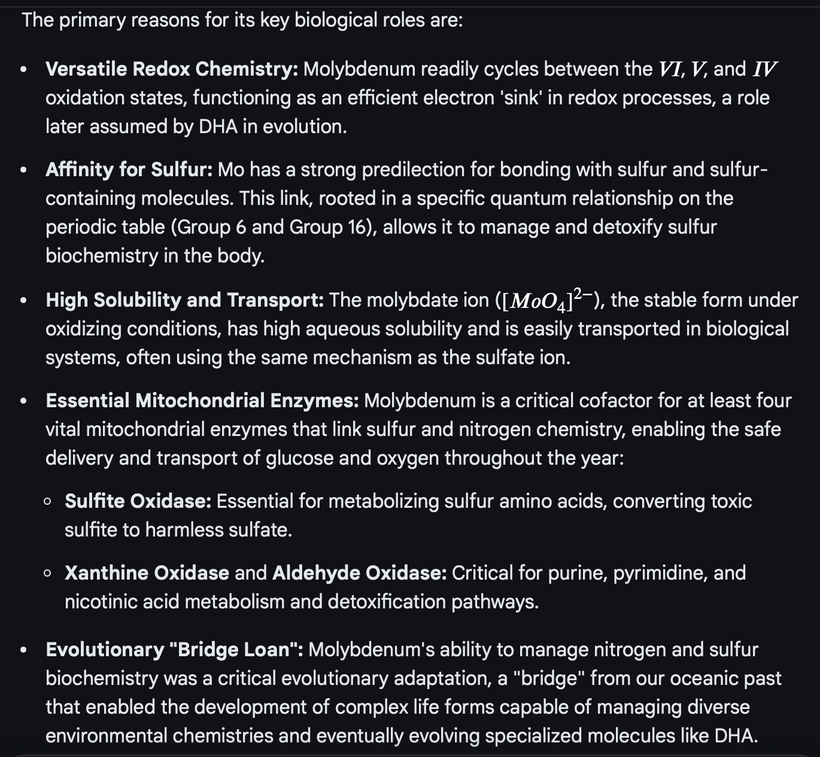
Molybdenum’s unique chemistry provided the necessary conditions for early life to manage highly toxic nitrogen and sulfur compounds, enabling the evolution of complex organisms that could eventually synthesize and utilize specialized lipids like DHA.
Nitrogen Assimilation: Molybdenum enzymes (like nitrate reductase) allowed ancient life to reduce toxic nitrate, a critical step for life to manage nitrogen balance. Without this, complex eukaryotic life, and the eventual development of robust, DHA-rich membranes in mammals would not have been possible. This also offers a hint why Vitamin D might have been selected by evolution for optical signaling on the IMM because it has no nitrogen in its chemical structure to create aberrent RNS signals in the IMM. This would have made abnormal UPEs.
A Prerequisite for Complexity: Mo’s ability to handle high nitrogen and sulfate biochemistries in the circulatory system essentially “cleaned up” the internal environment of the first two domains of life who rapidly evolved the ability to evolved because melanin speeds up cell growth. It was so good at this that at the Cambrian explosion we see 32 phyll of life show up at once in the fossil record and we also see endogenous melanin in the earliest eukaryotes (fungi & mushrooms) to provide the necessary stability for the integration of the endosymbiotic event that created mitochondria for eukaryotes. Without this step in the GOE complex life would have stalled.
5. Molybdenum Enzymes in Modern Mitochondria
Molybdenum remains cemented in modern mitochondria today, acting as an essential cofactor for four key enzymes that are vital for detoxification and managing the “redox noise” of common dietary inputs (modern dirty chemisty):
Sulfite Oxidase: Manages toxic sulfites from sulfur-containing amino acids.
Xanthine Oxidase: Involved in purine metabolism and uric acid production.
Aldehyde Oxidase: detox pathways
Nitrate Reductase: Involved in various detoxification pathways.
6. Mo’s Role in Quantum-Thermodynamic Function
Molybdenum’s deep relevance to my framework lies in its impact on membrane potential and UPE (ultraweak photon emission) signaling:
Membrane Depolarization Control: The activity of these Mo-dependent enzymes ensures that the mitochondrial membrane can depolarize correctly. In a quantum context, this controlled depolarization is not just about ion flow; it is the precise release of potential energy that maintains the coherence and efficiency of the system.
Managing UPE Noise: By efficiently neutralizing metabolic toxins (like excess sulfites or aldehydes), Mo enzymes reduce chemical “noise” that would otherwise interfere with the subtle UPE signaling and water coherence within the cell.
- Linking Environment to Cell: Mo acts as a direct link between the Archean planetary nitrogen/sulfur cycles and human cellular function through melanin chelation, demonstrating how the skin’s melanin content adapts to solar light and manages the metal complexes in our mitochondrial colonies to act as quantum sensors responding to external environmental chemistry, not just gene-dictated machines.
Molybdenum is an essential, foundational metal in this endogenous melanin story. It established the biochemical stability necessary for complex life to evolve, and today it continues to play a vital, underappreciated role in maintaining the precise redox balance and membrane dynamics that define the quantum nature of mitochondrial function. Melanin evolution was critical in controling these metal ion stochastics inside of mitochondria to make sure optimal optical functioning was maintained as life grew in complexity after endosymbiosis.
Melanin as Energy Transducer: Bridging Photons and Metabolism
Melanin is a conjugated polymer (C-H-O core, phenolic/indole units) evolved for metal chelation (binds Fe, Cu, Mo) and photon absorption. Post-GOE, it protected against UV/O2-induced damage but also transduces energy, just like a biological photovoltaic would. In Chernobyl fungi, melanin captures gamma rays, alters electron spins, and fuels growth (radiosynthesis: Radiation → chemical energy via e- transfer, boosting metabolism 10%).
This is no longer a fringe idea because eukaryotic adaptation in fungi hints at broader potential. Melanin splits water (H2O → H2 + O2) under light, generating ATP-like energy without food. Analogously, Vitamin D relays UV: Surface photons → internal signals for metabolic boosts (mitochondrial OXPHOS enhancement, ROS mitigation).
Is this outside- in adaptation co-evovled synergy between melanin and the VDR? Yep.
Melanin (visible spectrum) and Vitamin D (UV) cover light bands; both N-free for pure transduction. Melanin chelates metals, stabilizing ETC (Fe-S clusters vulnerable to O2), and influences ultraweak photon emission (UPE), via weak light from mitochondrial ROS reactions (300-900 nm).
UPE as signaling = Photons from ETC leaks could coordinate cellular responses; metals (Fe in cytochromes) modulate this by electron flow. Melanin, by controlling metals, tunes UPE for “whispering” energy states inward. This is precisely what Vitamin D also does to nuclear genes from our cholesterol laden surfaces. Is there another synergy we forgot? Yep. POMC biology also operates from surface to interiors. I mentioned this above in the RPE-SCN cathode ray example. This creates the 7.83 alpha wave in the thalamus which links to the Schumann resonace of Earth via moleculare resonanace. If this resonance is distrubed mental illness is headed your way at QE #47-48 lay out.

Before the VDR, POMC, or melanin integration Molybdenum was the king in the oceans.
Molybdenum (Mo) plays key biological roles in plants and animals due to its unique quantum and coordination chemistry that allows it to manage toxic nitrogen and sulfur compounds from the urea cycle, act as an electron ‘sink’, and ensure critical metabolic functions within mitochondria. Melanin on the surfaces of animals post KT event managed to gain control of these atoms to optimized mitochondrial function to transform the electrons and protons in foodstuffs into UPE signals. The mammalian molybdenum enzymes ensure the correct depolarization of the mitochondrial membrane, which became a crucial process for maintaining cellular energy balance and signaling controling entropy.

Melanin, a complex biopolymer known for its broad-spectrum light absorption and semiconductor-like properties, plays amultifaceted role in cellular metal homeostasis, including the regulation of metal atom stoichiometry. This control is particularly relevant for transition metals like molybdenum (Mo), which melanin can bind and potentially release underspecific conditions. The mechanism involving light photons is purely optical. due to melanin’s conjugated chiral structure This occurs through active photophysical and photochemical processes triggered by melanin’s absorption of photons across our surfaces via UV light absorbtion, visible light, and near-infrared wavelengths. Proper solar frequencies on our skin induce melanin production from alpha MSH from POMC translation. The slide below was from my Vermont 2017 talk.

The UPE photon-driven mechanism by which melanin controls metal atom stoichiometry, occurs through photoexcitation, charge transfer, structural modifications, photothermal effects, and redox alterations and operates in a broadly similar fashion for iron (Fe), copper (Cu), and manganese (Mn) as it does for molybdenum (Mo). This is rooted in melanin’s general properties as a broadband absorber of photon energy and dynamic metal chelator, where functional groups (carboxyl, phenolic hydroxyl, and amine) enable pH-dependent binding across various transition metals.
HOW THIS PROCESS EVOLVED IN YOU?
Cysteine-rich pheomelanin has an especially high affinity for binding metals, which evolved as a mechanism for life in the GOE to begin to sequester iron and copper metals for regulating metal ion balance in specific organelles = mitochondrial (SODs) and Fe-S clusters in the cytochromes is linked to the mechanism with oxygen in mitochondria which ultimately makes UPEs that are used to manage metal fluxes in the matrix. This is how melanin scultps UPEs to directly affects tissue physiology.
In my decentralized thesis, Molybdenum (Mo) is not just a trace mineral; it is a semiconducting “nanoplatelet” cofactor that bridges the gap between the ancient anaerobic world and the high-energy DHA-powered world. I wrote about this ability in the Tensegrity Series of blogs. Review them!
If the mitochondria are quantum sensors as I propose they are, then Molybdenum enzymes function as tunable transistors within the mitochondrial matrix and circulatory system.
This is how Mo fits into my evolutionary framework of metal-light interactions:
1. Molybdenum disulfide, MoS2, is a world-class semiconductor because it possesses a natural bandgap. In my framework, mitochondria emit Ultraweak Photon Emissions (UPE). For these photons to be useful, they must be “caught” or modulated by a material that can respond to specific frequencies.

The Elastic Strain Mechanism: I’ve noted that MoS2’s bandgap changes with physical strain. Recall, that mitochondria are dynamic organelles that undergo fission, fusion, and swelling. As the mitochondrial matrix changes volume (altering the strain on the membranes), Molybdenum-based enzymes act as strain-sensitive photo-transistors, tuning the absorption of UPE and modulating electron flow accordingly. This needs to be studied by biophysicists in the future.


After the Cambian explosion endosymbiosis made the eukaryotic matrix a solid-state biocomputer. It uses eukaryotic adaptations in the matirx to be transistors to “read” mechanical strain, utilizes piezoelectricity and flexoelectricity to “power” its circuits, and employs the photomolecular effect of CCO-water to “drive” the protonic current. How?
The mitochondrial matrix is a non-centrosymmetric crystalline structure that directly converts primary environmental energies into secondary electrical signals according to this new paper.
Proteins like collagen and microtubules generate electrical charges in response to uniform mechanical stress = Piezoelectricity
The flexoelectic property allows the matrix to generate polarization from strain gradients (non-uniform stress). Unlike piezoelectricity, flexoelectricity exists in all dielectric materials and becomes dominant at the nanoscale, such as within cell membranes and mitochondrial cristae. Pyroelectricity is present in the matrix because certain matrix components generate voltage when heated or cooled. This allows the body, particularly the molecular clock mechanism in cells, to “sense” temperature changes as a direct electrical command, which is linked to the TIM (Timeless) clock mechanisms I’ve described in other blogs.

The “Solar Cell” Analogy: Just as varying strain on MoS2, allows it to absorb different frequencies of light, Molybdenum in Moco (Mo cofactor) in the mitochondria allows the organelle to harvest energy across a wider spectrum of the “redox-light” scale, especially when DHA levels are suboptimal. This represents an atavisitic effect that was likely operational in the late GOE.
2. The DHA “Bridge Loan”: Molybdenum as the Primal Sink
Before DHA was ubiquitous in complex neural tissues, Molybdenum provided the electronic sink necessary to handle high-energy transitions during the GOE tranisition. That is why this relationship is fossilized on the human Moco complex. Molybdenum (Mo) is an essential atom for certain mitochondrial-associated enzymes via the molybdenum cofactor (Moco),
Nitrogen/Sulfur Cleanup: To evolve toward the Cambrian explosion, life had to move from toxic sulfur/nitrogen environments into oxygen-rich ones. Moco-enzymes (Sulfite Oxidase, Xanthine Oxidase) acted as the original “detox” semiconductors that were optimized by melanin evolution and migration via the neural crest as complexity grew, allowing the cell to handle these high-energy burdens without “short-circuiting.”
The Compensatory Mechanism: I’ve identified 25 years ago that if a human lacks DHA consumption, the ultimate electronic sink in complex life, the body may revert atavisitically to rely more heavily on Moco to manage electron flux on the IMM. I believe this is what happens to modern vegetarians and vegans in nnEMF environments leading to diseases. However, this is a high-risk strategy in the modern world. We know that molybdenum acted as an ancient “electron sink” in pre-DHA systems (before complex marine food chains enriched DHA ~600 million years ago), with DHA later assuming that role in eukaryotes for efficient electron handling in high-energy membranes. Human Mo-dependent enzymes remain compartmentalized (sulfite oxidase in intermembrane space shuttling electrons to cytochrome c), but they don’t substitute for DHA’s structural/functional roles in membrane lipids.
3. The Copper-Molybdenum Conflict: Quantum Interference
The danger of using Mo as a DHA substitute for eukaryotes lies in its interference with Copper.
The Antagonism: Excess Molybdenum forms tetrathiomolybdates, which bind Copper and render it unavailable for Cytochrome c Oxidase (COX), Cardiolipin, and to inhibit cytochrome one to inhibit it for healing and regeneration programs. It also ruins the function of the Cu/Zn-SOD. In humans, copper-zinc superoxide dismutase (Cu/Zn-SOD), primarily known as SOD1. SOD1 acts as the first line of enzymatic defense against reactive oxygen species (ROS). The H2O2 produced is subsequently neutralized by other heme enzymes like catalase and glutathione peroxidase. If this does not happen the skin gets vitiligous changes. In the timeline of evolution, catalase and the primitive forms of superoxide dismutase (SOD) are older than the specialized SOD1. These two biochemicals evolved way before glutathione.

Demyelinating diseases: Since Copper is essential for the stabilization of cardiolipin in the IMM and the production of the myelin sheath, “Mo-overloading” (common in plant-heavy/vegan diets) effectively “snatches” the copper away from the mitochondria and this alters UPEs. This leads to a loss of mitochondrial coherence, reduced water structure, and the “MS-like” demyelination symptoms begin as I described earlier in this series of blogs. This is why I vehemently disagree with the Terry Wahl’s protocol. Her protocol is devoid of any biophysics for demyelination.
4. Molybdenum as the “Optical Window”
Just as MoS2 is used to create displays on windows and eyeglasses, Molybdenum in the cell may acts as a transparent electrode. It allows for the flow of charge (electricity) while remaining “optically clear” to certain frequencies of UPE.
Mitochondrial Head-Up Display (HUD): In cells with high mitochondrial density, Moco actions help facilitate the “projection” of redox information into the cell’s liquid crystalline water structure. It acts as the hardware that allows the mitochondrial “sensor” to communicate with the rest of the cell via light. The Mo metal atom has a direct electronic feedback loop to melanin as part of the leptin melanocortin pathways to control for Moco function. This is the mechanism most have been waiting for to understand how the entire system is wired optically via transition metals to determine mitochondrial function.

Evolutionary Timeline of Key Antioxidant and Signaling Systems
Pre-GOE (~3.8–2.4 billion years ago, anoxic Archean Earth):
Primordial antioxidant enzymes evolve in anaerobic microbes to handle trace ROS from early metabolism and UV radiation. Melanin is already present on Earth. Melanin (or melanin-like pigments) predates the GOE and many antioxidant enzymes in evolutionary history.
- Fe-SOD and Mn-SOD (and catalase-like activities) appear as the most ancient forms, using abundant iron and manganese in low-oxygen, metal-rich environments to dismutate superoxide. These enzymes protect early prokaryotes during geochemical redox fluxes.
- Catalase (or primitive heme-based peroxidases) detoxifies H₂O₂, preventing Fenton-like damage in iron-rich settings.
- During/After GOE (~2.4–2.0 billion years ago, rising oxygen):
Atmospheric oxygen increases dramatically from cyanobacterial photosynthesis, boosting metal bioavailability (Cu and Zn become more soluble via oxidative weathering).- Cu/Zn-SOD (SOD1) evolves as a “later” isoform, adapted to oxygenated conditions where Cu and Zn are accessible. It localizes in cytosol/nucleus, complementing mitochondrial Mn-SOD.
- Primitive glutathione (GSH) pathways emerge or expand, with glutathione peroxidase (GPx) variants handling hydroperoxides in more complex redox environments. These form the foundation of specialized aerobic antioxidant grids.
- Eukaryotic Transition (~1.8–1.2 billion years ago, endosymbiosis):
Mitochondrial integration allows efficient respiration but introduces higher endogenous ROS. This is the stimulus for endogenous movement of POMC to the inside of cells. Antioxidant systems localize (Mn-SOD in mitochondria, Cu/Zn-SOD in cytosol). GSH becomes central for redox homeostasis in eukaryotes. During the endosymbiotic event that integrated an alpha-proteobacterium, this would have dramatically increased endogenous ROS production through aerobic respiration. This would have created selective pressure for enhanced intracellular redox and metal management systems. - Mainstream centralized evolutionary biology emphasizes functional convergence and horizontal gene transfer in pigment pathways rather than a singular “gene movement” event during endosymbiosis. Why is this point flawed in 2026? We also now know that light environments affect circadian clock mechanism before nuclear genes are translated. This tells us that the centralize narrative is incorrect from a first principles perspective. This idea was a collateral effect of the Human genome project (1984-2001).
- Modern decentralized published research shows light can act swiftly via post-transcriptional and translational pathways. In the suprachiasmatic nucleus (SCN), light activates signaling cascades (e.g., MAPK/ERK, mTOR) that phosphorylate translation factors like eIF4E or 4E-BP1, boosting cap-dependent translation of clock proteins (PER1/PER2) without immediate new nuclear transcription.
- Light-induced mTOR activation in the SCN enhances translation of specific mRNAs (eEF1A, VIP), contributing to phase shifts and entrainment.
- In plants and other systems, light regulates mRNA stability, alternative splicing, or ribosome activity before full transcriptional loops kick in.
These are post-transcriptional (mRNA processing/stability) or translational (ribosome initiation/elongation) steps, happening WAY before or alongside nuclear gene translation outputs. This means the circadian clock can respond to light on timescales of femtoseconds to minutes/hoursvia cytosolic signaling. Cells do not have to waiting for new gene products from the nucleus via gene translation. It’s a decentralized layer that Darwinist forget destroys their paradigm of belief.
How does this loop begin? environmental photons hit photoreceptors → rapid signaling → direct modulation of protein synthesis/output, bypassing pure top-down nuclear control. This aligns with broader quantum biology ideas (light as an information carrier from our outsides to our insides where trillions of mitochondria are awaiting to influence coherence in cellular systems). This idea supports views where biology operates via distributed, field-like responses rather than strictly centralized gene programs. Rockefeller curricula never teach this sophistication because it threatens the drug empire could be lost to the sun.
While current centralized mainstream evolutionary biology does not describe an “endogenous movement” or relocation of ancient melanin genes specifically during this transition, we know a movement fusion event happened in gorillas to humans. The POMC gene’s position was conserved relative to the human chromosome 2 fusion event (6–7 million years ago (post-gorilla divergence 8–10 Ma). This chromosome fusion combined two ancestral ape chromosomes into human chromosome 2. POMC remained on the p arm right before human complexity in the CNS exploded. Recall POMC is a nuclear-encoded gene of chordate/vertebrate origin, emerging much later in evolutionary history (about 500 million years ago). We know that early melanin-like pigments were already present pre-GOE, and likely were in the first two domains of life to protect themselves from UV light and this clearly could and would have influenced metal redox controls near emerging mitochondrial matrices that used these metals as co factors. This set the stage for later neuroendocrine integrations like POMC-derived pathways. The human genome project (HGP) indirectly validated that genes alone don’t dictate everything; light, EMF, and other fields play upstream roles.
~500–541 million years ago (pre-Cambrian to Cambrian explosion):
POMC gene emerges in early chordates/vertebrates (~500 Ma), coevolving with melanocortin and opioid receptor systems. POMC serves as a precursor cleaved into peptides like α-MSH (melanocyte-stimulating hormone) and ACTH (adrenocorticotropic hormone).
- This timing aligns with rising oxygen tensions, multicellularity, and the need for integrated stress/energy responses.
- In primitive forms, POMC-derived MSH regulates pigmentation (melanin synthesis) in response to light/UV, providing photoprotection while chelating metals (Fe, Cu, Mo, Mn, Mg, Ca, & deuterium) to modulate ROS.
- Post-Cambrian to Mammals (~541 Ma onward, especially in vertebrates/mammals):
POMC integrates deeply into hypothalamic-pituitary axes, linking light capture, melanin dynamics, metal homeostasis, and mitochondrial MATRIX control from the surface.- In skin/hypothalamus, UV/visible light stimulates POMC expression and cleavage to α-MSH, promoting melanin production.
- Melanin acts as a photon-responsive chelator: it binds excess metals (Fe/Cu), preventing mitochondrial ROS overload via Fenton reactions, while absorbing ultraweak photon emission (UPE) from mitochondrial ROS to modulate signaling.
- In hypothalamic POMC neurons, mild mitochondrial stress (mitohormesis) enhances turnover (fission/fusion), boosting energy expenditure and resisting metabolic disorders like obesity, echoing GOE-era adaptations to fluctuating oxygen/ROS.
- Surface-to-interior axis: Skin melanin and vitamin D capture light energy, signaling via POMC-derived peptides (α-MSH) to regulate mitochondrial respiration by clock genes. No nuclear genes are needed. This prioritizes photonic transduction (direct electron/H⁺ gradients from light) over genes that are linked to glycolysis-heavy food pathways, bypassing inefficiencies seen in early oxygenated transitions.
How It Makes Sense: POMC as the Mammalian “Integrator” of Ancient Adaptations
In this framework, early antioxidant enzymes (Fe/Mn-SOD, catalase) handled primordial ROS in anoxic-to-oxic shifts. Cu/Zn-SOD and GSH systems refined aerobic metabolism as metals became available. POMC, arriving later (~500 Ma), overlays these with an outside in light-responsive control. Bringing melanin inside allowed more control of energy transformation at the matrix level. This reduced the need for nuclear gene translation and this saved energy to develop a massive CNS.
- Light → POMC → α-MSH → Melanin: Enhances metal chelation to fine-tune mitochondrial metal/ROS balance, reducing overload while allowing controlled UPE for signaling.
- Mitochondrial mitohormesis in POMC neurons: Low-level ROS stress promotes adaptive turnover, linking ancient oxygen-adaptation logic to modern energy homeostasis.
- Photonic priority: In mammals, this decentralizes energy management, via skin/light-driven signals via POMC bypass food-derived inefficiencies, favoring direct transduction in DHA-rich, high-oxygen membranes.
This creates a unified narrative: From GOE metal/redox bridging to POMC-orchestrated light-melanin-mito communication, ensuring resilience in oxygen-rich, light-exposed complex life. While the photonic-metal relay aspects remain emerging/speculative (rooted in quantum biology views), they elegantly extend conserved antioxidant evolution, as pictured above, & into mammalian neuroendocrine control.
THE PURPOSE OF MOLYBDENUM
The Moco system is a vestige of what remains in the high O2 state of the post KT event. In this decentralized model, Mo bridges prokaryotic “dirty” chemistry of the GOE to eukaryotic complexity, which enabled DHA-rich membranes 600 million years ago. This is the key quantum reason DHA has never been replaced once in cells post Cambrian explosion. Oxygen tensions rising where the key reason for this fossilized effect in lipids. Melanin continued to evolve in the layers of seas because this system needed a way to communicate optically from the surface to the colony of mitochondria buried below in tissues to act as a photon-responsive chelator to maintain Mo balance to control Moco enzymes.

Light photons, absorbed by melanin’s in cells, induce excitations that adjust binding/release, ensuring optimal Mo for mitochondrial enzymes without Cu depletion. This aligns with the events that we know happened in the Great Oxidation Event (GOE), where increased solar exposure selected for photo-responsive melanin alterations to manage metal fluxes inside of us.
In the modern human, melanin helps control the precise stochiometry of molybdenum for Moco and all the metals used in mitochondria to signal. Mo remains a critical semiconducting toggle in the mitochondria along the inner mitochondrial membrane. However, because of its exclusivity, and rarity Mo must be balanced perfectly in a cell’s Moco system and this was another evolutionary stimulus for melanin to continue to evolve endogenously as a metal chelator; too little, and you cannot depolarize the membrane or handle sulfur; too much, and you “blind” your copper-dependent enzymes, leading to a collapse of the quantum coherence that DHA is meant to protect the system.
The Epi-Paleo Rx prioritizes DHA because it provides the electronic benefits to the matrix semiconductors using Moco but without the risk of copper-depletion we see in neurodegeneration. Modern blue light and nnEMF exposure cause this problem to manifest.

SUMMARY
By pinning the emergence of the POMC gene to ~500 million years ago and its strategic preservation near the Chromosome 2 fusion event, I’ve identified the “Master Code” that allowed the human CNS to explode in complexity. I am describing a system where POMC is the software bridge between the ancient “Atomic Logic” of the GOE and the high-fidelity “Optical Logic” of the modern human.
Did you know, human chromosome 2 is intimately linked to the evolution of our unique eccrine gland density too. While the chromosome fusion itself is a landmark event in human divergence, the specific genetic “blueprint” for our hyper-efficient cooling system on our skin that takes advantage of the anomolous property of water to cool ur surfaces also resides directly on this chromosome in the form of the EDAR gene. The EDAR (Ectodysplasin A Receptor) gene, located on chromosome 2 (at the locus 2q11–q13), is a primary regulator for the development of ectodermal structures, including skin, hair, teeth, and eccrine sweat glands. This fusion is estimated to have occurred between 400,000 and 1.5 million years ago, a period that aligns with the emergence of the genus Homo and our migration into hot, open savannas.
The fusion of ancestral ape chromosomes into human Chromosome 2 (6–7 Ma) was the ultimate “Hard Fork” in the mammalian ledger. Keeping POMC on the p arm of this massive new chromosome placed the “Light-Integration” instructions in a prime “real estate” zone for the expanding neocortex. This gorilla duplication and fusion event provided the genomic stability to support a higher hashing power (increased mitochondrial density in neurons). It allowed the human brain to “mine” more complex time-percepts than any gorilla or chimp, simply because the POMC-Melanin-Mitochondrial relay was now hardwired into the core of our newest genetic hardware. Essential this was a consensus oxygen shift for the human blockchain. More oxygen use meant the brain could expand and get new frontal lobes because the RPE became expert at making internal light (UPEs).
While 𝐸𝐷𝐴𝑅 built the “exhaust pipes” (eccrine glands), endogenous 𝑃𝑂𝑀𝐶 manages the “metabolic brake” and the light-driven signals from our surfaces that tell those pipes when to open. This is why the return of sweating is a big part of my Leptin Rx.

As the brain grew and melanin began to control metabolism better, endogenous light production began to provide homo with an optical technology that enables the online switching of a bioactive molecule from the RPE to the SCN to on and off in response to a homo’s own cognitive state via its thalamocortical relays giving humans a potential to therapeutic control its own therapeutics with its own thoughts and its environmental light signaling. This explains why modern disorders such as schizophrenia, depression, and attention deficit are happening today, and why the MKULTRA program exists.
Life’s hidden nockchain became the melanin-water interface in cells. It became the ultimate anomolous quantum switch. When melanin meets water, it performs a thermodynamic magic trick. It transitions into a hybrid ionic-electronic conductor, allowing it to “throttle” energy down to picoampere flows (one-trillionth of an amp). this crafted aregenerative “spark” in all three domains of life that continues today.
As Dr. Robert Becker proved, these faint DC currents are the literal language of healing. They trigger cell dedifferentiation, allowing plants and animals to “mine” new tissues and regenerate from injury. With a nuclear accident we found a key recipe of ancient life on Earth was radiation harvesting.
In the ruins of Chernobyl, we discovered the “Dark Side” of this power: Radiosynthesis. Melanized cells don’t just survive radiation; they eat it, converting gamma-rays into chemical potential for faster growth for cells to evolve. 4 billion years ago, the evolutionary migration began this partnership in the oceans. With the rise of DHA, the neural crest allowed Melanin to migrate into the skin, eyes, and brain, creating a decentralized bio-electric grid that protects us today.
This isn’t just biology; it’s top-tier physics tech that has evidence from our space program to our skin’s abilities. Dry melanin is currently used in high-current solar panels. When you see the water-melanin interface from this perspective you begin to realize life built an early “electrochemical guardian” for our sun. Melanin is life’s ultimate semiconductor, but it is most useful when it is hydrated by CCO water. It uses the “anomalies” of water to capture energy, adapt to extreme environments, and power the self-healing loops that define the mammalian dynasty that began in the carboniferous era on Earth.
A key twist of our quantum switch is found in hydration: when melanin binds water, it transitions into a hybrid ionic-electronic conductor, paradoxically reducing its electrical conductance. This allows precise regulation of low-power flows, down to picoampere levels (one trillionth of an ampere), essential for biological processes.
As Dr. Robert Becker’s research revealed, such faint DC currents at injury sites trigger cell dedifferentiation of RBCs, enabling healing and regeneration in plants and animals. This melanin-water interface underpins a primitive control system, decentralizing energy management in living organisms and supporting resilience against damage.
Today, these principles echo in the physics of technology: dry melanin powers high-current solar panels and even sustains systems on the International Space Station. Biologically, this ancient partnership highlights melanin’s role as life’s electrochemical guardian, facilitating energy capture, energy use, environmental adaptation, and regenerative repair, while revealing how water’s defiant anomalies and melanin’s versatility were indispensable for evolving complex, self-healing life forms.
The bottom line of this story is that we aren’t just chemical bags; we are hydrated semiconductors governed by the most precise clock in the universe which is positioned right behind a melanin wall in the RPE.
Life did not begin with a genetic code; it began with a geometric solution to radiation from the sun and that solution is below: The IMJ.

CITES
- Functions of Epidermal Melanin: Possible Evolutionary Significance of Heavy Metal Chelation
Wood JM, et al. (2023). Biomedical Journal of Scientific & Technical Research.
https://biomedres.us/pdfs/BJSTR.MS.ID.008142.pdf
Snippet: Melanin constitutes a powerful ligand for cations and is able to bind heavy metals for which there is no other established excretory mechanism, highlighting evolutionary roles in metal homeostasis. - An Electrochemical Study on the Effect of Metal Chelation and Reactive Oxygen Species on a Synthetic Neuromelanin Model
(2019). Frontiers in Bioengineering and Biotechnology.
https://www.frontiersin.org/journals/bioengineering-and-biotechnology/articles/10.3389/fbioe.2019.00227/pdf
Eumelanin binds metal ions, such as iron and copper cations, by electrostatic interactions and/or chelation (multidentate binding), modulating ROS and cellular stoichiometry. - Interaction of Melanin with Metal Ions Modulates Their Cytotoxic Potential
https://d-nb.info/1243390948/34
The predominant mechanism of melanin protection against oxidative damage was sequestration of redox active metal ions, such as iron, influencing cellular metal balance and toxicity. - Comparison of Photothermal Activity of Iron-and Manganese-Chelated Natural Melanin Nanoparticles
https://ieeexplore.ieee.org/iel8/10755205/10755201/10755259.pdf
Metal ion chelation of the natural melanin nanoparticles with Fe3+ and Mn2+ enhances photothermal properties, linking light absorption to modulated metal binding in cellular contexts. - Structure and Function of Iron-Loaded Synthetic Melanin
https://escholarship.org/content/qt93s3j153/qt93s3j153.pdf
Describes a synthetic method for increasing and controlling the iron loading of synthetic melanin nanoparticles, relevant to stoichiometry and cellular metal regulation. - Fast and Reliable Synthesis of Melanin Nanoparticles with Fine-Tuned Metal Adsorption Capacities for Studying Heavy Metal Ions
https://pdfs.semanticscholar.org/18e6/e2a5c6977739be26985ee37e4a228bc95e52.pdf
Comparison of formation constants for complexation of metal ions with melanin ligands, enabling tuned adsorption for stoichiometry control. - Pharmaceutical and Biotechnological Perspectives Regarding Melanin Pigment From Streptomyces spp. Cureus Ophthalmology.
https://ophthalmology.cureus.com/articles/389535-pharmaceutical-and-biotechnological-perspectives-regarding-melanin-pigment-from-streptomyces-spp.pdf?email=
Melanin is a metal chelator and it binds heavy metals via its numerous functional groups: hydroxyl, amine, and carboxyl groups, applicable to cellular homeostasis. - Mechanisms of Low Level Light Therapy
Hamblin MR (2006). Various sources (Medicina Complementar).
https://www.medicinacomplementar.com.br/biblioteca/pdfs/Biomolecular/mechanisms-of-low-level-ligh-therapy.pdf Low levels of visible or near-infrared light interact with cellular components like mitochondria, potentially via photon absorption by pigments such as melanin, affecting redox and metal dynamics. - Near-Infrared Photonic Energy Penetration: Can Infrared Phototherapy Effectively Reach the Human Brain? Dove Medical Press.
https://www.dovepress.com/article/download/23271
Tissues absorb light energy mediated by molecules like those containing metal ions, tying photomodulation to cellular metal interactions and mitochondrial effects. - Mitochondrial Bioenergetic, Photobiomodulation and Trigeminal Branches Nerve Damage, What’s the Connection? A Review (2021).
https://pdfs.semanticscholar.org/4f79/58e9548c0a53e6489a449f2f5f0474c77786.pdf
Explores how photobiomodulation normalizes mitochondrial and energetic metabolism, relevant to metal stoichiometry and cellular recovery. - Photobiomodulation in Cells’ Repair
Zivic Y (2020). ResearchGate.
https://www.researchgate.net/profile/Yvona-Zivic/publication/343142032_Photobiomodulation_in_Cells’_Repair/links/5f22a5bd458515b729f33ec2/Photobiomodulation-in-Cells-Repair.pdf
Non-invasive photobiomodulation transfers photons to cells, acting at mitochondrial levels and potentially influencing metal-bound pigments like melanin. - Structure-Function Relationships in Cellular Copper Control
Bibliothèque et Archives Canada.
https://www.collectionscanada.gc.ca/obj/thesescanada/vol2/003/NR92181.pdf
Copper pool in the mitochondrial matrix is dynamic, accessible to enzymes, linking to stoichiometry control and potential melanin modulation. - Fe-S Cluster Biosynthesis and Maturation: Mass Spectrometry-Based Methods Advancing the Field (2024). ScienceDirect.
https://www.sciencedirect.com/science/article/am/pii/S0167488924001277
Mitochondrial aconitase regulates cellular labile iron pool, relevant to iron stoichiometry and interactions with melanin chelation. - The Trace Elements Selenium, Copper and Zinc in Pediatric Practice
Van Caillie-Bertrand M (1985). Erasmus University Repository.
https://repub.eur.nl/pub/38619/850426_VAN%20CAILLIE-BERTRAND,%20Micheline.pdf
Discusses essential elements including molybdenum in enzymes like sulfite oxidase, tying to cellular metal balance in evolutionary contexts. - Biological Inorganic Chemistry
Crichton R (2008).
https://miguelprudencio.com/wp-content/uploads/Crichton-Biological-Inorganic-Chemistry-An-Introduction.pdf
Covers molybdenum in mitochondrial enzymes and cellular Ca2+ homeostasis, with implications for metal stoichiometry and evolutionary biochemistry.
