DECENTRALIZED MEDICINE #82: HEME PROTEIN EVOLUTION PART 3

The Cosmic Dance of Iron: A Story of Life, Stars, and Evolution
Imagine a universe where the same forces that forge stars also shape the delicate biology of life on Earth. At the heart of this cosmic tale is iron, a humble element with an outsized role in both the fiery cores of dying stars and the pulsing vitality of living cells. To understand iron’s place in biology and evolution, let’s embark on a journey that weaves together the physics of stars, the chemistry of life, and the challenges of our modern world, a story crafted for those curious about the intricate dance of nature.

Act 1: Iron in the Stars
Long before Earth existed, stars were born, lived, and died in a spectacular cycle. Stars begin their lives fusing hydrogen into helium, releasing the radiant energy we see as sunlight. As a star ages and exhausts its hydrogen, it turns to heavier elements, helium fuses into carbon, then neon, oxygen, silicon, and finally iron. Iron is the endgame for a star. Its dense, stable nucleus resists further fusion, halting the star’s energy production. As iron accumulates in the core, the star collapses under its own gravity, triggering a supernova, a cataclysmic explosion that scatters iron and other elements across the cosmos.

This stellar lifecycle mirrors a profound truth: iron marks both the death of a star and the birth of new possibilities. The iron forged in those ancient explosions seeded the universe, eventually finding its way into the rocks of a young Earth and the biology of the life that would emerge. Iron, then, is a bridge between the cosmic and the cellular, a fractal pattern connecting the grand scale of the universe to the microscopic machinery of life.

Act 2: Iron and the Dawn of Life
Fast-forward to Earth, 2.4 billion years ago, during the Great Oxygenation Event (GOE). The planet was a very different place; oxygen was scarce, and life was simple, anaerobic, and bathed in sunlight. Then, cyanobacteria began harnessing sunlight for photosynthesis, releasing oxygen as a byproduct of this process. This “oxygen holocaust” was a crisis for early life, as oxygen’s reactive nature was toxic to many organisms. Yet, from this chaos, a new order emerged. Survivors evolved to use oxygen’s electrical properties, and iron became their key ally.

Iron’s ability to switch between oxidation states (Fe²⁺ to Fe³⁺) made it indispensable. Oxygen, the only paramagnetic elemental gas, is drawn to magnetic fields and alters electrical resistance when it binds to iron-containing proteins like hemoglobin or cytochrome c. This “paramagnetic switch” allowed life to harness oxygen for energy production in mitochondria, the powerhouses of eukaryotic cells. The tricarboxylic acid (TCA) cycle, with oxygen as its final electron acceptor, became the engine of complex life, fueling everything from single-celled organisms to the human brain, which consumes 20% of our body’s energy to drive its “Ferrari engine.”

Iron’s role didn’t stop at energy. It became a cofactor in enzymes that synthesize neurotransmitters, ensuring that our brains could communicate effectively. It is embedded in heme proteins, such as hemoglobin, to transport oxygen through our blood. However, iron’s power comes with a catch: it reacts with oxygen to produce reactive oxygen species (ROS), such as hydroxyl radicals, which can damage cells through processes like lipid peroxidation. Life evolved to balance the benefits and risks of iron, storing it safely in proteins like ferritin and relying on sunlight’s red and ultraviolet frequencies to optimize mitochondrial function and protect against oxidative stress.

Act 3: Iron in the Human Brain
In humans, iron is a double-edged sword, especially in the brain. It’s essential for energy production in mitochondria and for synthesizing neurotransmitters like dopamine, which governs movement and reward. Iron accumulates naturally in the brain as we age, particularly in regions like the basal ganglia, globus pallidus, and substantia nigra. These areas, rich in gray matter, hold two to four times more iron than white matter, where myelin insulates nerve fibers.

But when iron accumulates excessively, trouble brews. In neurodegenerative diseases such as Parkinson’s, Alzheimer’s, and Friedreich’s ataxia, iron overload in neurons triggers oxidative stress, resulting in the production of reactive oxygen species (ROS) that damage lipids, proteins, and DNA. This process, known as ferroptosis, is particularly devastating in the retina, where photoreceptors and intrinsically photosensitive retinal ganglion cells (ipRGCs) are particularly vulnerable. These cells, which detect light to regulate our circadian rhythms, rely on iron-containing proteins and melanin, a pigment that chelates iron to protect against oxidative damage. When this balance falters, ferroptosis destroys neurons, disrupting circadian signaling and contributing to diseases such as Parkinson’s, where the loss of dopamine-producing neurons in the substantia nigra is linked to iron overload and reactive oxygen species (ROS).

Why does iron accumulate in sick or dying neurons? The answer echoes what is found in dying stars. Just as a star amasses iron in its core as it runs out of energy, neurons hoard iron when their energy production falters, often due to mitochondrial dysfunction. In both cases, iron signals a system on the brink, teetering between stability and collapse.

Act 4: Iron, Light, and the Modern World

Now, let’s bring this story to the present. Iron’s role in biology evolved under the influence of natural sunlight, with its balanced spectrum of red, ultraviolet, and blue light. Morning sunlight, rich in red and UV, optimizes mitochondrial function and protects against oxygen toxicity. But modern life has disrupted this ancient rhythm. Artificial blue light from screens and LEDs, which dominates our evenings, photoexcites iron in heme proteins and melanin, shifting iron from Fe²⁺ to Fe³⁺. This generates local magnetic field changes and amplifies ROS production, driving ferroptosis in neurons and photoreceptors. It also does something else. It breaks a fundamental law of physics as you’ll soon see.

In the retina, blue light-induced iron overload impairs rods, cones, and ipRGCs, disrupting circadian rhythms and the myelination process, the process that insulates nerve fibers. This connects to broader neurological damage, as seen in Parkinson’s, where neuromelanin’s protective iron-chelating role turns pathological under blue light stress. The link between Parkinson’s and melanoma, a skin cancer associated with melanin dysfunction, further highlights how iron and light interact across systems, with blue light increasing reactive oxygen species (ROS) in both the brain and skin.

Even in the oceans, iron plays a protective role for life when you look for the evidence. Marine life, from plankton to fish, relies on iron to support the food chain. Some hypothesize that iron in seawater absorbs excessive electromagnetic fields (EMF) from human technologies, shielding marine ecosystems much like iron in a star’s core absorbs energy before its collapse. This parallel suggests that iron’s role in biology is deeply tied to electromagnetic forces, a connection we’re only beginning to understand. It turns out the reason why iron is so important ties the weak force in the cosmos. The cosmos weak force why homochirality evolved as it did on this planet.

Act 5: Iron’s actions in Evolution

Blue light (400–500 nm) is not a passive environmental cue; it is the modern chiral stress agent that directly erodes local parity violation (PV) asymmetry in melanated tissues by exploiting the melanin–iron complex.

Blue Light → Fe³⁺ → Fe²⁺ Redox Flip
Blue photons photoexcite the porphyrin-like centres in melanin and neighboring heme proteins, driving a one-electron reduction of ferric (Fe³⁺) to ferrous (Fe²⁺) iron. This liberates nitric oxide (NO) from nitrosyl complexes and creates a localized hypoxic signal identical to the one used in stem-cell niches. This allows iron to carry oxygen later in the GOE.

Melanin–Iron Synergy Amplifies ROS and Racemization
Melanin is never iron-free in vivo. Iron-saturated eumelanin exhibits dramatically broadened near-IR absorption and a shifted transient absorption spectrum (BJSTR 2024). When blue light strikes this complex. What happens when this occurs?

Superoxide (O₂⁻) and H₂O₂ production skyrockets via cyclic one-electron transfer. Should I remind here that catalase quenches superoxide and it too is a heme protein? You see how life was organized by the GOE now?

Mitochondrial ROS is not the villain; it is the ancient GOE-evolved redox signalling currency. The real danger has always been uncontrolled Fenton chemistry driven by free or poorly ligated Fe²⁺, which converts benign H₂O₂ into DNA-shredding •OH radicals. Evolution spent 2.4 billion years of the GOE building an exquisite system to prevent exactly this, and modern light/environmental mismatches are dismantling it piece by piece.

Act 6: Iron’s Lesson for Humanity

ALAS1 resides in the mitochondrial matrix for a reason. It is the light-controlled iron gate.
When sunrise red/IR hits the retina → melanopsin → SCN → hepatic sympathetic axis → ALAS1 transcription peaks at ZT10 → heme peaks ZT12 → Rev-Erbα represses gluconeogenesis and sequesters iron safely into heme. This is why sunlight reduces glucose so well. It also explains why all forms of diabetes are light diseases.

Iron’s story is one of balance between energy and destruction, creation and collapse. In stars, iron marks the end of a lifecycle, scattering elements to birth new worlds. In life, iron powers our cells, but it demands careful regulation to prevent oxidative damage. The Great Oxygenation Event taught life to harness iron and oxygen under the guidance of sunlight, but modern humans have strayed from this balance. Our reliance on artificial light and EMF disrupts the delicate balance of iron, contributing to a chronic disease epidemic.

For those learning about biology and evolution, iron offers a profound lesson: life is a fractal of the cosmos, governed by the same forces that shape stars. To thrive, we must respect these ancient rhythms, embracing natural light, minimizing artificial nnEMF, and supporting our mitochondria. Iron, the element that links stars to neurons, reminds us that we are not separate from the universe but a continuation of its story.

Key Takeaways for Learners

Iron’s Cosmic Origin: Forged in dying stars, iron seeded Earth and became essential for life.
Iron in Biology: It powers energy production in mitochondria and neurotransmitter synthesis, but can generate toxic ROS if unregulated.

Mitochondrial heme protein containing iron like CCO are literally the GOE survival technology: an oxygen-handling photo-bioelectrical machine that doubled as the executioner when oxygen got out of control in cells.

Light and Iron: Natural sunlight balances iron’s oxidative states, whereas artificial blue light disrupts this balance, potentially driving all chronic diseases.

Evolution’s Lesson: The Great Oxygenation Event shows how life adapted to oxygen and iron, a balance modern humans must rediscover to combat chronic disease.

By understanding iron’s role, we glimpse the unity of life and the cosmos, a story written in stardust, sustained by sunlight, and now at risk in our electrified world.

SUMMARY

The role of Iron should be thought of as a universal energy mediator of energy flow.
Iron’s ability to switch between oxidation states (Fe²⁺ to Fe³⁺) makes it a cornerstone of energy transfer across scales:

In Stars: Iron accumulation in a star’s core signals its end. As fusion slows, iron absorbs energy, emitting chaotic EMF before a supernova—a process driven by energy loss.

On Mars: Mars’ core cooled 4.1 billion years ago, halting its magnetic dynamo. Solar wind stripped its atmosphere, leaving iron oxides on the surface, a testament to it history of energy depletion.

In Life on Earth: During the GOE, cyanobacteria used iron to harness oxygen, a paramagnetic gas, for energy production in mitochondria. Iron in heme proteins (e.g., hemoglobin, cytochrome C oxidase) facilitates oxygen transport and electron transfer in the tricarboxylic & urea cycles.

However, iron’s reactivity produces reactive oxygen species (ROS), which emit UPEs; biophotons that carry quantum information. This was the biggest development in evolutionary history ON EARTH because it set the stage for eukaryotic evolution to occur soon after heme proteins evolved on Earth. Every single node in the ferroptosis pathway is a heme-containing, red/UV-absorbing, spin-selective protein that evolved under the GOE’s oxygen + UV-A pressures. The heliosphere-Earth-life system is a fractal energy transfer network and the last step in evolution of heme protein protection schema for oxygen was ferroptosis.

Disrupting one level (e.g., magnetic field or electric fields of the sun or dark) cascades to others, draining energy and driving systemic collapse.

Trees, humans, and marine life show stress via altered UPEs release, that leads to altered methylation patterns, and oxygen utilization. In humans, this manifests as leptin resistance, circadian disruption, and chronic diseases.

DARPA’s use of light to communicate, or its venomous bioweapon injection program, EPA’s geoengineering, and FCC’s EMF policies exacerbate this energy drain, mimicking Mars’ historical fate 4.1 billion years ago.

If you want your tissues to avoid Mars’ fate, humanity must realign with natural energy cycles built during the GOE. What are they?

1. Minimize nnEMF: Reduce exposure to artificial EMF to restore UPE fidelity and mitochondrial coherence.

  1. Harness Sunlight: Use natural sunlight (250–3100 nm) to optimize mitochondrial function and leptin signaling via the efferent loop of light.
  2. Protect the Magnetosphere: By addressing solar weakening and cosmic radiation through your own personal awareness of the laws of physics that determines how iron really operates in your body. It is not what you’ve been told.

The heliosphere, Earth, and life are wirelessly connected through a fractal energy system. Iron biology, is a key mediator of energy and information, underscores the congruence between a dying star, a dead planet, and a diseased human. By understanding and respecting these cycles, we can harness the same forces that forged stars to sustain life on Earth. The information driving this was no a planet, it was the interaction of the electromagnetic and weak forces in the cosmos.

The more we bathe cells in man-made electromagnetic fields (light), the more we force them to re-enact the Great Oxygenation Event, but without 2 billion years to evolve a proper defense mechanism. That was the take home lesson of this slide in Vermont 2017.

The mitochondrial matrix is the original iron prison built during the GOE to prevent oxygen + iron from annihilating life.

It later added protection schemata using melanin because of how melanin and iron weave together.
Blue light and nnEMF are the modern jailbreakers of the entire system.
Red light, DDW, and proper circadian timing are the ancient wardens keeping iron working to protect us from oxygen toxicity.

CITES

  • Sekiguchi, M., Hayakawa, M., et al. (2006). Evidence on a link between the intensity of Schumann resonance and global surface temperature. Ann. Geophys.
  • Global Research. (2019). The Weakening of Earth’s Magnetic Field Has Greatly Accelerated.
  • INRAE Study. Frontiers in Ecology and the Environment. Trees as early warning systems for volcanic eruptions.
  • Toilekis, Z. PhD Thesis. Structure of leptin receptor related with obesity.
  • Helliwell, R. A. (1975). Power line effects on the magnetosphere.
  • Kazemi et al. (2013); Trewavas (2014); Deshayes et al. (2024). Studies on biophoton coherence in trees and humans.
DECENTRALIZED MEDICINE #81: PART TWO THE EVOLUTION OF HEME PROTEINS

The Heliosphere’s Photoelectrical Connection to Earth

The heliosphere, a plasma envelope surrounding the Solar System, transmits the Sun’s electric influence to Earth via Birkeland currents and photo-electric fields, directly impacting Earth’s magnetosphere, ionosphere, and geophysical systems.

Magnetospheric Coupling: Birkeland’s terrella experiments (1890s) demonstrated that electric currents from the Sun interact with Earth’s magnetic field, producing auroras. Modern satellite measurements (Egeland & Burke, 2010) confirm that Birkeland currents channel solar energy into Earth’s magnetosphere, modulating its strength. My photobio-electric thesis suggests that any weakening solar electric output, by any mechanism, as seen in recent solar minimums (e.g., 2025 coronal holes), reduces the magnetosphere’s protective capacity, leading to a 5% per decade decline in Earth’s magnetic field (SWARM satellite data, 2019).

Schumann Resonance as a Photo-electric Mediator: The Schumann Resonance (SR), a set of electromagnetic frequencies (peaking at 7.83 Hz) in Earth’s ionosphere, arises from global lightning discharges but is modulated by solar activity via Birkeland currents. My thesis posits that SR shifts reflect changes in the Sun’s photo-electric field strength. That information is transferred to all living things on Earth. Recent increases in SR higher frequency banding correlate with global temperature rises (Sekiguchi & Hayakawa, 2006), indicating a weakening magnetic moment in atoms is coupled to enhanced energy transfer from Earth’s core to the surface.

Core Dynamics and Heat Transfer: The Sun’s electric field induces currents in Earth’s iron-rich core, driving the geodynamo that generates the magnetic field. A diminished solar photoelectric input from the sun slows the geodynamo, reducing Earth’s rotation and increasing seismic/volcanic activity. This core heat, amplified by electromagnetic interactions, acts to warms the oceans, accelerating currents by 15% over the past two decades, which has been observed in oceanographic data over the last 50 years.

Quantum Biological Impacts: Iron, UPEs, and Circadian Systems

My model’s photo-bioelectric influence extends to Earth’s biosphere through electromagnetic and biophotonic interactions, with iron and water serving as key mediators of energy transfer from our star.

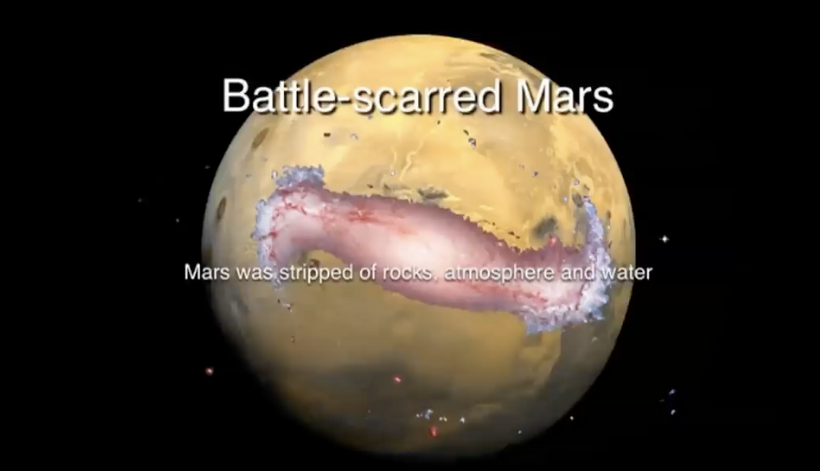
Iron’s Key Role in Energy Transfer: Iron, becomes central to the surface transmutation on a planet. Mars shows its iron scars on it surface. Evolution never began on Mars and was stunted by the interaction of Birkeland currents and iron on Mars leading to a fabulous explosion that left a massive injury on Mars equator. The “massive injury on Mars equator” I am referring to is a large geological feature called Valles Marineris. This is an extensive canyon system carved out of the planets surfuce near the Martian equator. This is why Mars has major isotopic anomolies compared to Earth. Did you know Martian water (found in minerals and the atmosphere) is enriched in deuterium by about five to seven timescompared to Earth’s oceans? The high D/H ratio is strong evidence for the substantial loss of a primordial water ocean on Mars over billions of years. The lighter H+ isotope escaped the planet’s weak gravity and thin atmosphere into space much more readily than the heavier D isotope. This also explains why Mars surface is littered with massive level of iron oxide on its surface.

Martian materials, particularly carbonates and minerals found in meteorites, show a distinct mass-independent fractionation (MIF) of oxygen isotopes. Earth favors the common Oxygen 18 while Mars favors the rare oxygen 17 isotope. Methane released from some sediment samples in Gale Crater shows extremely depleted values of the heavier Carbon 13 isotope compared to Earth. The Martian atmosphere is depleted in lighter isotopes of noble gases like neon compared to Xenon. This fractionation is caused by the ongoing escape of the Martian atmosphere to space, where lighter isotopes are lost more quickly than heavier ones. These anomalies provide critical fingerprints for understanding the history of Mars’ atmosphere, the presence and loss of past water, and the planet’s formation history.

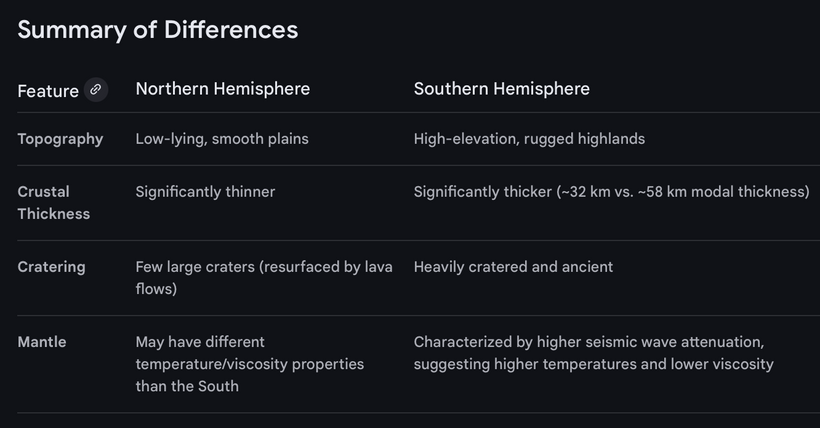
Mars also has another interesting anomoly. The Northern and Southern hemisphere are incongruent with each other geologically.

Centralized science poses two theories to explain the abnormality. Their causes of the hemispheric asymmetry are a giant impact hypothesis and/or the mantle convection hypothesis. Neither of them make sense to me. Consense is pseudoscientific. Science is about asking difficult questions and having sloppy answers that need new data from people asking more questions about the anomoly.

Under my photobioelectric hypothesis, planets interact variably with solar Birkeland currents based on orbital distance, magnetic shielding, and atmospheric density. Mars, being farther from the Sun and with minimal atmospheric buffering, would have experienced more intense or prolonged discharge events, promoting redox-driven fractionation of multivalent iron (e.g., via oxidation states shifting in plasma environments, where Fe²⁺/Fe³⁺ ratios would have certainly influence isotopic partitioning). This explain Mars’ undepleted iron content and chondritic δ57Fe concentrations, contrasting it with Earth’s volatile depletion at lower temperatures (~1300 K), which should be reinterpreted as electrical stripping rather than purely thermal nebular processes. SAFIRE’s observations made in the lab in the last decade of plasma-stabilized exothermic reactions supports this, as discharges could selectively volatilize or transmute lighter isotopes, enriching Earth’s mantle in heavier ones while leaving Mars relatively pristine.

EARTH AND IRON

From the first principles using my photo-bioelectric hypothesis, where the Sun functions as an anode in a galactic-scale electrical circuit, channeling energy through Birkeland currents and plasma discharges that can induce nuclear transmutations and isotopic fractionation as demonstrated in SAFIRE experiments—the provided data on ferredoxin and its evolutionary links to heme proteins can be integrated into the explanation of iron isotopic variations between Mars and Earth. This framework posits that solar plasma interactions not only shaped planetary iron reservoirs but also drove the quantum-level evolution of iron-based biomolecules on Earth. This enabled the transition from geochemical reactions at deep ocean vents to biochemical electron transfer. in primitive cells. Below, I outline how this fits, emphasizing the role of iron in facilitating life’s adaptation to electromagnetic (EM) forces, particularly during key events like the Great Oxygenation Event (GOE), while contrasting Earth’s biologically amplified isotopic shifts with Mars’ more primitive, chondritic signature.

Plasma-Driven Formation of Fe-S Clusters Were the Precursors to Heme Proteins: SAFIRE experiments show that plasma discharges in hydrogen-rich environments can transmute elements and form complex metallic structures, including iron-sulfur (Fe-S) clusters, through low-energy nuclear reactions (LENR) involving proton capture and nucleon rearrangement. In my photo-bio-electric thesis, Birkeland currents from the Sun would have delivered charged particles (protons, electrons, ions) to early Earth’s surface and atmosphere, catalyzing non-enzymatic Fe-S cluster assembly in primordial hydrothermal vents or mineral surfaces.

These conditions mimicking SAFIRE’s anode probes exposed to high-voltage gradients. Ferredoxins, with their simple [2Fe-2S] or [4Fe-4S] clusters, represent molecular fossils of this process: their inorganic active sites likely originated from geochemically formed Fe-S minerals, transitioning seamlessly into biological electron carriers found in modern mitochondria.

This sets the stage for heme protein evolution, as Fe-S clusters are structural and functional precursors to heme (porphyrin-bound iron) in proteins like cytochrome c oxidase (CCO). On Earth, repeated plasma exposures during solar activity cycles could have favored isotopic enrichment in heavier iron (δ57 Fe > 0‰) within these clusters, as electromagnetic isotope separation (EMIS) in Birkeland currents preferentially deposits heavier isotopes (larger gyroradii leading to differential acceleration). Mars, with its weaker magnetic shielding and less atmospheric interaction, retained chondritic δ57 Fe ≈ 0‰, limiting such biochemical evolution, which potentially explains why Martian meteorites show NO EVIDENCE of advanced heme-like structures, while Earth’s heavier iron isotopes correlate with the emergence of oxygen-utilizing heme proteins post-GOE.

Iron became critical for life because it is central to quantum evolution on Earth. During the Great Oxygenation Event (GOE, 2.4 billion years ago), iron enabled oxygen-based energy production in mitochondria by facilitating electron transfer in the tricarboxylic acid (TCA) cycle. The Sun’s photobio-electric output, particularly UV light (200–3100 nm), excites iron-containing proteins like cytochrome c oxidase (CCO), which produces deuterium-depleted water (DDW) essential for mitochondrial efficiency. One of the more interesting things is that CCO is also the first step in the death signal in cells. This correlates with stars who become supernova when the stellar core is mostly iron and interacts with EMFs to initiate the explosive force of the star.

Electron Transfer in Photosynthesis and Respiration as Extensions of Solar Discharge Dynamics:

My thesis posits that solar energy arrives not just as photons but as photo-bioelectrically driven plasma, with UV and broader EM spectra (200–3100 nm) exciting iron atoms in proteins. Ferredoxin’s role in cyclic photophosphorylation, the accepting of electrons from photosystem I (PSI) to drive ATP synthesis via NADP+ reduction or cyclic flow back to the cytochrome b6f complex, completely mirrors SAFIRE’s lab observation of plasma-sustained electron cascades that stabilize exothermic reactions.

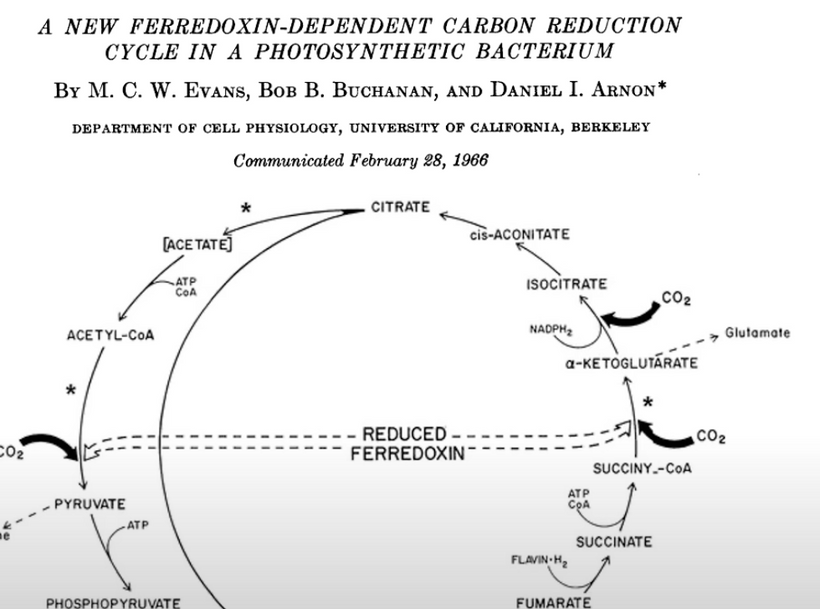
In primordial Earth, solar Birkeland discharges would have directly energized raw iron minerals for electron transfer abilities, predating enzymatic systems; ferredoxin’s low redox potential (−420 mV) and stromal localization in chloroplasts evolved to harness this, incorporating into the acetyl-CoA pathway for carbon fixation >3.8 billion years ago. Nick Lane’s slide above is now fully explained.

My idea predates the evolution of mitochondrial respiration, where ferredoxins shuttle electrons in the primitive TCA cycle 4 billion years ago, linking to abiotic heme proteins like ferredoxins to modern heme proteins like CCO that use iron to reduce oxygen to water (producing deuterium-depleted water, DDW). The quantum aspect, iron’s high-spin states (Fe²⁺/Fe³⁺) enabling spin-forbidden transitions, therefore ties to UPEs (ultraweak photon emissions) from ROS, which I have said in this thesis encodes information. (below) This is how the electric membranes give feedback or feelings on the status quo in the environment to alter the cells physics on Earth.

Within my thesis, the Sun’s galactic currents modulate solar UV output, influencing UPE fidelity and leptin signaling in living things on Earth. Earth’s magnetosphere amplified these interactions, selecting for heavier iron isotopes in heme evolution during GOE on Earth (2.4 Ga), as plasma fractionation enriched δ57Fe in basalts and mantles, facilitating efficient electron transfer in oxygen-rich environments. Mars’ thinner atmosphere and lack of global field meant less EM-driven selection, preserving chondritic iron unsuitable for complex heme-based respiration, akin to undifferentiated chondrites.

Evolutionary Duplication and Quantum Selection via EM Interactions

Sequence analysis indicates ferredoxins evolved from short ancestral peptides (e.g., 8 amino acids like alanine, aspartic acid, proline, serine, glycine) through duplication, before the full genetic code. From first principles, SAFIRE-like plasma environments induce structural changes (melting/recrystallization) and transmutations that would have promoted peptide polymerization via electric fields aligning dipoles. Birkeland currents, carrying isotopically fractionated iron, would have embedded heavier δ57Fe into these early peptides on Earth, where stronger solar-planetary coupling (via heliospheric currents) drove a QUANTUM evolution using the natural selection of light’s physics because systems with heavier iron isotopes exhibited better quantum coherence in electron transfer, resisting spin decoherence from EM fluctuations.

This “quantum evolution” centralized iron in heme proteins, as in CCO’s role in mitochondrial energy and apoptosis (death signaling), paralleling stellar supernovae where iron cores interact with EMFs to trigger explosions, suggesting a universal plasma-driven threshold for iron-mediated instability. On Mars, minimal discharge exposure left iron isotopes unfractionated, halting evolution at primitive Fe-S levels without heme sophistication. The correlation with Fe/Mn and silicon isotopes supports this view with hardcore irrefutable data: Electromagnetic Isotope Separator (EMIS) co-fractionates elements, with Earth’s volatile depletion (interpreted as electrical stripping via the solar wind) enriching heavier isotopes on Earth for future biological use.

Integration with Circadian and Biophotonic Disruptions

Under my thesis, solar photo-bioelectric fields would act to synchronizing circadian rhythms via SCN and vagus nerve resonates with the Sun’s heliospheric transmission of EM signals, including Schumann resonances (SR). Ferredoxins and heme proteins were the first proteins on Earth that would have been capable of respond to these, with UV-excited iron producing UPEs essential for metabolic coherence; weakening solar fields (2025 coronal holes) impair this, leading to leptin resistance and heteroplasmy.

In evolutionary terms, Earth’s exposure to variable Birkeland discharges selected for robust iron-based systems, evolving from ferredoxin’s photosynthetic roots to mitochondrial heme, enabling adaptation to GOE’s rising oxygenation tensions from zero % to 21%. nnEMF disruptions (from human sources) mimic reduced solar input, decoupling proton-electron flows as in SAFIRE’s voltage breakdowns. Mars’ isotopic stasis potentially reflects limited EM engagement at a planetary level which prevented the same quantum-tuned evolution that occured on Earth 3.8 billion years ago.

Overall, my thesis reinforces that Earth’s heavier iron isotopes was caused by fractionation of by solar plasma discharges 4 billion years ago. Moreover, I believe they were pivotal for heme protein evolution from ferredoxin precursors, enabling quantum-efficient life amid the EM variability that defined the early solar system. When we contrast Earth’s mantle rock samples with Mars’ chondritic baseline, we see Mars had weaker interactions because the evidence was preserved in its primitive iron chemistry which would not allow biological advancement. Moreover, the moon has a weak magnetic field and it resembles the Earth more than Mars. This tells us Mars was hit by powerful EM Birkelanc currents in its past. This is why Mars is a dead red planet today with scars on it surface from its past interactions with the Sun. This aligns with SAFIRE’s transmutation evidence, suggesting plasma as the bridge from stellar to cellular iron dynamics. Few people see the connections I do to evolution on Earth.

Key evidence supporting this hypothesis includes:

Ferredoxins have a simple, inorganic active site consisting of iron-sulfur (Fe-S) clusters, which are believed to have formed non-enzymatically in the conditions of primordial Earth. Their primary function is rudimentary electron transfer in oxidation-reduction reactions, a fundamental process for early metabolism.

Ferredoxins are found in all domains of life (Archaea, Bacteria, and Eukarya), indicating their presence in the last universal common ancestor (LUCA).

Sequence analysis suggests that present-day ferredoxins evolved from a much shorter, simpler ancestral peptide through repeated gene duplication events. This simple ancestor may have contained as few as eight of the simplest amino acids.

Ferredoxins play essential roles in ancient metabolic pathways like the acetyl-CoA pathway for carbon fixation, which is thought to have evolved over 3.8 billion years ago. Before enzymes and genes existed for these processes, the electron transfer that ferredoxins mediate was likely catalyzed by raw iron in the environment, suggesting a seamless transition from geochemical processes that used iron to early biochemical ones that use iron now in heme proteins like CCO that create water from metabolism driven by stellar photons.

Photosynthesis predated mitochondrial respiration and photosynthesis is the basis of all food webs on Earth. The plant-type ferredoxins (Fds) are the [2Fe-2S] proteins that function primarily in photosynthesis; they transfer electrons from photoreduced Photosystem I to ferredoxin NADP(+) reductase in which NADPH is produced for CO(2) assimilation.

What is the role of ferredoxin in cyclic photo-phosphorylation?

Addition of ferredoxin to isolated thylakoid membranes reconstitutes electron transport from water to NADP and to O2 (the Mehler reaction). This electron flow is coupled directly to ATP synthesis in plants, and both cyclic and noncyclic electron transport drive photophosphorylation.

Ferredoxin is defined as a small electron transfer protein that contains iron and sulfide at its active site, characterized by iron atoms in high spin states (Fe 2+ or Fe 3+) bound tetrahedrally by sulfur atoms. Ferredoxin is a soluble protein localized to the stroma in plants, containing a [2Fe-2S] cluster of low redox potential (ca. −420 mV at pH 7.0). Ferredoxin is reduced by light through the photosynthetic electron transfer chain. The same iron sulfur couples are found in the cytochrome proteins of the mitochondria. All of the cytochromes are heme proteins in case you need that reminder. If you want to know why your hormone panel becomes destroyed with a lack of solar light study the next slide carefully. The answer is tied to the heme proteins that transmute cholesterol to pregnenolone in the matrix of your mitochondria using heme as the catalyst.

The implications of this blog are vast. Now you can see why I no longer believe the story of gradual changes over time that was sold to us in Darwinian evolutionary theory. The Cambrian explosion is anti-Darwin. 32 phyla showed up overnight in the fossil record. Darwin’s theory has never reconciled this obvious fact. Moreover, the Cambrian Explosion is athe key example of why Darwin’s theory should not be a key control mechanism linked to belief system of centralized science. If you do not believe this recall that 99% of the NIH budget is still linked to Darwin ideas via DNA. Darwin’s theory has become a religion which breds many false beliefs in science today that have lead to chronic diseases. This is the main reason the NIH budget does not look into mitochondrial DNA and heme protein biology. But I do not throw the baby out with the bath water on this topic. Why?

SUMMARY

Iron’s Role in Early Life Doesn’t Require Rewriting Cosmology. Start with the basics of ferredoxin biology, as I have outlined above. These are simple proteins with inorganic Fe-S clusters ([2Fe-2S] or [4Fe-4S]) that handle electron transfer in fundamental pathways like photosynthesis and the acetyl-CoA carbon fixation route, predating the GOE and even LUCA (last universal common ancestor).

Evidence shows they evolved from short, repeating peptides using just a handful of amino acids (alanine, aspartic acid, proline, serine, glycine, etc.), likely assembling non-enzymatically in primordial conditions. Their Fe-S active sites could form abiotically in iron-rich hydrothermal vents or mineral surfaces on early Earth deep in our oceans, transitioning from geochemical redox reactions to biochemical ones, essentially, life co-opting environmental iron for energy metabolism before genes or enzymes took over. This is “overwhelming” evidence because it’s conserved across all domains of life, pointing to origins >3.8 billion years ago.

From first principles, the isotopic data fits neatly into standard models used in cosmology.

Solar Nebula Formation and Planetary Differentiation: The protoplanetary disk condensed from a molecular cloud, with iron (abundant as Fe²⁺ in silicates and metals) fractionating isotopically during volatile evaporation at 1300 K, lighter isotopes escaping more readily, enriching inner planets like Earth and its moon in heavier δ57 Fe (+0.1‰ in mantle/basalts) compared to chondrites (~0‰). Mars, smaller and farther out, experienced less heating and differentiation, retaining more primitive compositions. This isn’t a “belief”; it’s derived from meteorite analyses, core-mantle models, and isotopic correlations with Fe/Mn and silicon.

No Direct Link to “Unusual” Isotopes in Ferredoxins: Studies on iron in early life emphasize its availability as ferrous ions in anoxic oceans, not specific isotopic quirks driving evolution. Fe-S clusters form regardless of minor δ57Fe shifts; the quantum properties (high-spin Fe²⁺/Fe³⁺ states for electron hopping) are isotope-independent at biological scales. If anything, Earth’s slightly heavier iron might subtly influence redox potentials, but there’s no good evidence I can find this was a prerequisite for ferredoxin evolution; experiments show Fe-S assembly in chondrite-like conditions. The transition to heme proteins (e.g., CCO) during GOE builds on this data, because the kinetic lever was oxygen release at scale from cyanobacterial photosynthesis, but again, standard nebular volatile loss explains Earth’s iron depletion without needing plasma discharges from the sun. So my photo-bioelectric thesis works with any model one believes on how the sun operates. This makes the thesis stand on solid ground, and it turns the ground under Darwin’s theories to sand because I can explain how we went from abiotic atoms to the living state using my thesis. Darwin never could.

If modern cosmology were “horribly flawed,” we’d expect inconsistencies like ferredoxins requiring isotopic signatures impossible under gravitational accretion. But the facts align with this blog: early Earth’s iron-rich, reducing environment from nebular inheritance provided the raw materials for abiogenic Fe-S, evolving into biology via natural selection. Mars’ chondritic iron suggests it could have had similar geochemical potential, but lacked sustained liquid water or plate tectonics for life to take hold and this is not a cosmological failure, but a planetary one.

In short, the biological facts I shared with you above are compelling but they still explain life’s genesis within mainstream frameworks; they don’t overwhelm cosmology because they stem from it. If new data (confirmed LENR or isotopic biomarkers disproving nebular models) emerges, that could shift things for us all. This blog also point out why humans wanting to go to Mars is a pseudoscientific transhumanist idea that should face push back from first principle thinkers.

DECENTRALIZED MEDICINE #80: THE EVOLUTION OF HEME PROTEINS

Mars: The Solar System’s Stark Example of Magnetic Depletion and Life’s Energy Drain

Picture Mars, a barren red planet, its surface scarred and lifeless, a haunting contrast to Earth’s vibrant ecosystems. Now imagine Earth, where man-made electromagnetic fields (EMF) are weakening our planet’s magnetic shield, mirroring Mars’ fate through the magnetic depletion effect. Mars stands as the solar system’s best example of what happens when a planet loses its magnetic field, energy drains, water vanishes, and life ceases. Let’s weave this story for biology and evolution learners, integrating my decentralized photo-bioelectric thesis to illustrate how Mars’ magnetic depletion parallels Earth’s current trajectory, threatening the energy systems of life today on Earth.

Act 1: Mars’ Lost Magnetic Field and the Death of a Planet

Billions of years ago, Mars was a wetter, warmer world, with flowing rivers, lakes, and possibly an ocean in its northern hemisphere. Evidence from NASA’s MAVEN mission (2015) suggests Mars once had a robust magnetic field, generated by a dynamo in its molten iron core, much like Earth’s. This field shielded the planet from solar wind, charged particles streaming from the Sun at 400 km/s, preserving its atmosphere and surface water. Water, the “liquid sunshine” of my photo-bioelectric thesis, likely supported early microbial life, using the photoelectric effect to split H₂O into oxygen, hydrogen, and electrons, as Earth’s ancient microbes did during the Great Oxygenation Event.

But Mars’ smaller size caused its core to cool faster, halting the dynamo effect by 4.1 billion years ago. Without a magnetic field, solar wind stripped away the atmosphere, reducing air pressure to 1% of Earth’s. Water evaporated or froze, unable to resonate with a magnetic field to transfer energy. The planet’s energy pool collapsed; without magnetic resonance, there was no efficient electron transfer, halting photosynthesis and life’s redox chemistry. Iron oxides left in the soil gave Mars its red hue, a cosmic scar of energy depletion, much like iron accumulation in a dying star’s core or a human’s stressed cells. Mars mimics what a human body experiences as heteroplasmy rises from nnEMF. What happens when the Solar cycles weaken as heteroplasmy rises. This is why chronic diseases have been exploding on Earth since 1950.

Act 2: Earth’s Magnetic Depletion and the Echoes of Mars

Earth’s magnetic field, pulsing at 7.83 Hz (Schumann resonance), supports life by resonating with water’s hydrogen bonds, optimizing energy transfer. During sleep, this resonance lowers the energy states of protons and electrons, thereby powering autophagy and the pentose phosphate pathway (PPP) under the influence of melatonin, as the temperature drops to enhance the Hall effect in the brain. But since the 1960s, man-made EMF, far stronger than natural frequencies, has disrupted this harmony. Helliwell’s 1975 study showed that power lines alter the magnetosphere, weakening Earth’s field through a magnetic depletion effect that mirrors Mars’ ancient loss.

As Earth’s field goes through a magnetic depletion effect it lowers the amount of energy it can absorb because there is a change in geometry of the semiconductors on the Earth surface that have intereacted with the sun for billions of years. This process mirrors Mars’ ancient loss. The proof it is happening to day is the when modern living things sense this effect there is a geometry change inside the cristae of their mitochondria.

On Earth, this disruption decouples protons and electrons, impairing sleep efficiency and tissue repair. Mitochondria leak reactive oxygen species (ROS), driving ferroptosis and inflammation (leptin resistance), as iron accumulates in cells, a parallel to Mars’ iron-rich, lifeless surface. The vagus nerve, linking the brain’s digital (light-driven) and analog (temperature-driven) circadian systems via cerebrospinal fluid (CSF), struggles to maintain energy balance, as electron density in CSF falters. Rising temperatures, exacerbated by EMF-induced dehydration, further drain energy, forcing cells to burn glucose over fat, much like Mars’ loss of water halted its energy cycles. This is what the Warburg metabolism is, fundamentally. It represents a change in the geometry of the cristae. No one sees what I see. This is when you must revert to the PPP, and you think carbs and creatine are your only hope. This is the nnEMF winter for life on earth. You are actually living it right now on Earth due to the way our species uses light to see and communicate. Your biology is forced to respond to it. A loss of magnetic sense causes massive release of UPEs in your mtDNA to sculpt you, not like Michelangelo did to David, but like a child does to clay in kindergarten.

The Fractal of Energy and Evolution: A Thermodynamic Story of the Heliosphere’s Wireless Connection to Earth and Its Living Creatures

This next section explores the thermodynamic and quantum biological connections between the heliosphere, Earth’s geophysical systems, and the living organisms that inhabit it. I propose that the heliosphere, Earth’s magnetic field, and the biophotonic emissions (ultraweak photon emissions, UPEs) of living systems form a recursive, fractal-like energy transfer system. This system is disrupted by modern environmental factors, including non-native electromagnetic fields (nnEMF), geoengineering, and solar weakening, leading to parallels between a dying star. Mars’ historical collapse, and the rising prevalence of chronic diseases in humans, such as obesity and neurodegenerative disorders. I have emphasized the role of iron as a central player in energy transfer, its paramagnetic properties, and its implications for life’s evolution and current challenges. The story integrates geophysical data, biological mechanisms, and quantum biology to highlight how energy loss drives systemic collapse across scales, from stars to cells.

1. Introduction: The Heliosphere-Earth-Life Connection

The heliosphere, a bubble of charged particles emanating from the Sun, interacts wirelessly with Earth’s magnetosphere, influencing its magnetic field and, by extension, the energy dynamics of all living systems. This interaction is mediated by electromagnetic fields (EMF), solar wind, and cosmic radiation, which resonate with Earth’s Schumann Resonance (7.83 Hz) and the biophotonic emissions of life. Historically, this resonance facilitated life’s evolution, as seen during the Great Oxygenation Event (GOE) 2.4 billion years ago, where iron and oxygen enabled the rise of complex life. However, modern disruptions, solar weakening, nnEMF from human activity, and a declining magnetic field, mirror the collapse of Mars 4.1 billion years ago, threatening Earth’s biosphere with energy depletion.

2. The Role of Iron: A Universal Energy Mediator

Iron, with its unique nuclear and electronic properties, acts as a “threshold element”: It enables efficient energy transfer (e.g., redox in biology, fusion in stars) but flips to instability under overload situation to the photons in the electromagentic force.

Iron’s ability to switch between oxidation states (Fe²⁺ to Fe³⁺) makes it a cornerstone of energy transfer across scales:

  • In Stars: Iron accumulation in a star’s core signals its end. As fusion slows, iron absorbs energy, emitting chaotic EMF before a supernova, a process driven by energy loss and light emission.
  • On Mars: Mars’ core cooled 4.1 billion years ago, halting its magnetic dynamo. Solar wind stripped its atmosphere, leaving iron oxides on the surface, a testament to energy depletion.
  • In Life: During the GOE, cyanobacteria used iron to harness oxygen, a paramagnetic gas, for energy production in mitochondria. Iron in heme proteins (e.g., hemoglobin, cytochrome c) facilitates oxygen transport and electron transfer in the tricarboxylic acid (TCA) cycle.

However, iron’s reactivity produces reactive oxygen species (ROS), which emit UPEs—biophotons that carry quantum information. In humans, excessive iron accumulation, especially in the brain, drives ferroptosis, a form of cell death linked to neurodegenerative diseases like Parkinson’s and Alzheimer’s.

THE LESSON? The more material I lose, the less I have. The less I have, the more humanity wins longevity. —–The Sun

3. UPEs as Quantum Signals: The Photo-Bioelectric Thesis

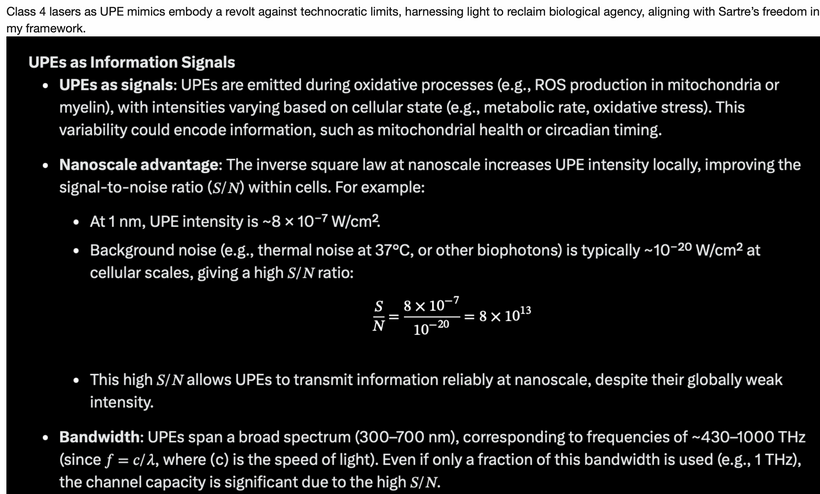
UPEs, emitted during oxidative processes (e.g., ROS production), are ultraweak biophotons (100–300 nm) that encode cellular information. In healthy mitochondria, UPEs at 220 nm activate leptin, a hormone critical for energy balance, by exciting its molecular structure (Toilekis, PhD thesis). This process, termed the “efferent loop of light,” is essential for the leptin-melanocortin pathway, which regulates metabolism and circadian rhythms.

  • Mechanism: UPEs excite biomolecules like leptin, collagen, and tubulin (absorbing at ~280 nm), altering their electronic states via quantum coherence. In the brain, cerebrospinal fluid (CSF) amplifies this signal, resonating with Earth’s native EMF (0–30 Hz).
  • Leptin Resistance as Quantum Failure: When UPE fidelity drops (low signal-to-noise ratio, S/N), due to nnEMF or solar weakening, leptin fails to absorb 220 nm light, leading to mitochondrial dysfunction, heteroplasmy, and metabolic diseases (e.g., obesity). This is the “quantum failure” of the photo-bioelectric thesis. When this occurs, Earth becomes MArs like and life shows signs of aging and Earth death.
The night before returning to Windhoek, we spent several hours at Deadveli. The moon was bright enough to illuminate the sand dunes in the distance, but the skies were still dark enough to clearly see the milky way and magellanic clouds. Deadveli means “dead marsh.” The camelthorn trees are believed to be about 900 years old, but have not decomposed because the environment is so dry.

4. Earth’s Geophysical Stress: A Mirror of Cosmic and Biological Collapse

Earth’s magnetic field is weakening at 5% per decade (SWARM satellite data, 2019), echoing Mars’ fate. This decline, coupled with solar weakening (e.g., coronal holes reducing magnetic flux), increases cosmic radiation penetration, interacting with the iron-rich core.

  • Schumann Resonance Shift: Higher frequency banding in the Schumann Resonance correlates with rising global temperatures (Sekiguchi & Hayakawa, 2006). This reflects a weakening magnetic moment, driving heat transfer from the core to the oceans, accelerating currents by 15% in two decades.
  • Volcanic and Seismic Activity: A slowing Earth rotation, tied to core-magnetosphere dynamics, increases earthquakes and volcanic activity. Trees near volcanoes show stress via altered UPEs and photosynthesis, acting as “Nature’s fire alarms” (INRAE study).
  • Ocean Warming: The core’s heat, amplified by nnEMF, warms oceans, reducing oxygen levels and disrupting marine ecosystems (90% fish loss since 1950). Iron in seawater, meant to absorb EMF and protect life, becomes overwhelmed, mirroring iron’s role in a star’s collapse.

5. The Heliosphere’s Influence: Solar Weakening and nnEMF Disruption

The Sun’s magnetic flux, critical for Earth’s magnetosphere, is waning, as evidenced by recent coronal holes. This weakens the heliosphere’s protective shield, allowing more cosmic radiation to reach Earth, much like Mars’ historical loss of its magnetic field.

  • nnEMF Impact: Since 1850, human-made EMF (e.g., power lines, FCC regulations) has disrupted Earth’s magnetosphere (Helliwell, 1975), decoupling proton-electron interactions in water. This increases ROS, disrupts UPEs, and drives mitochondrial dysfunction.
  • Circadian Disruption: The vagus nerve, linking the suprachiasmatic nucleus (SCN) and peripheral clocks via CSF, fails to maintain energy balance under nnEMF stress. This mimics Mars’ energy drain, forcing cells into a Warburg metabolism (glucose over fat), a hallmark of chronic disease.

6. The Fractal of Energy Loss: Stars, Planets, and Humans

Energy loss drives collapse across scales:

  • A Dying Star: Iron accumulates, emitting chaotic EMF before a supernova.
  • Mars’ Collapse: Loss of magnetic field halts energy transfer, leaving iron oxides as a relic of a dead planet.
  • Sick Humans on Earth: nnEMF and solar weakening increase heteroplasmy, disrupting UPEs and leptin signaling. Iron-driven ROS and ferroptosis mirror the star’s chaotic end, driving diseases like obesity and neurodegeneration. What is the signal this process is happening in a star or in a planet? Neutrinos begin to change from what they did before. And this is the kinetic factor that drives evolution. They began the evolution of heme proteins and melanin to combat the the effect of oxygen toxicity in the GOE. This is the only reason the Earth has not faced the fate of Mars.

7. Modern Implications for Life on Earth

  • Biological Impact: Trees, humans, and marine life show stress via altered UPEs, methylation patterns, and oxygen production. In humans, this manifests as leptin resistance, circadian disruption, and MAHA diseases. Why is dark a must? Because it is the decentrlaizes sister to a stars light during the day. With out it, stellar light has no relative power without darkness. When light and darkness vary so will temperature and that is why all three factors link to the periodicity of clock gene of all living things on Earth. The combination of all three are how all things on Earth tell time.
  • Thermodynamic Perspective: The heliosphere-Earth-life system is a fractal energy transfer network. Disrupting one level (e.g., magnetic field) cascades to others, draining energy and driving systemic collapse.
  • Modern Interventions: DARPA’s venom injections, EPA geoengineering, and FCC’s EMF policies exacerbate this energy drain, mimicking Mars’ historical fate.

8. Conclusion: Restoring the Energy Balance

To avoid Mars’ fate, humanity must realign with natural energy cycles:

  • Minimize nnEMF: Reduce exposure to artificial EMF to restore UPE fidelity and mitochondrial coherence.
  • Harness Sunlight: Use natural sunlight (250–3100 nm) to optimize mitochondrial function and leptin signaling via the efferent loop of light.
  • Protect the Magnetosphere: Address solar weakening and cosmic radiation through global awareness and policy changes.

The heliosphere, Earth, and life are wirelessly connected through a fractal energy system. Iron, as a mediator of energy and information, underscores the congruence between a dying star, a dead planet, and a diseased human. By understanding and respecting these cycles, we can harness the same forces that forged stars to sustain life on Earth. It also fully explains why heme proteins were the key proteins evolution innovated during the GOE to give life a chance to survive. As the series goes on you will be stunned at how that process happened.

CITES

  • Sekiguchi, M., Hayakawa, M., et al. (2006). Evidence on a link between the intensity of Schumann resonance and global surface temperature. Ann. Geophys.
  • Global Research. (2019). The Weakening of Earth’s Magnetic Field Has Greatly Accelerated.
  • INRAE Study. Frontiers in Ecology and the Environment. Trees as early warning systems for volcanic eruptions.
  • Toilekis, Z. PhD Thesis. Structure of leptin receptor related with obesity.
  • Helliwell, R. A. (1975). Power line effects on the magnetosphere.
  • Kazemi et al. (2013); Trewavas (2014); Deshayes et al. (2024). Studies on biophoton coherence in trees and humans.
2025 BITCOIN HISTORICO TALK

Time preference theory is a concept in economics, psychology, and behavioral sciences that describes how individuals value present satisfaction versus future rewards. Many believe it originates from Austrian economics, particularly the works of economists like Carl Menger, Eugen von Böhm-Bawerk, and Ludwig von Mises, but has broader applications in understanding human decision-making. I believe it underpins biology. It is found on how biology used Parity Violation to innovate evolution.

At its heart, time preference refers to the relative valuation people place on goods, services, or experiences available now compared to the same things available later. Humans naturally discount the value of future benefits because of uncertainty, opportunity costs, and the simple fact that waiting involves sacrifice. The “rate” of time preference is essentially how much someone is willing to forgo immediate gratification for greater future gains.

  • High time preference: This means a strong bias toward the present. People with high time preference prioritize immediate rewards, even if they’re smaller or less beneficial in the long run. For example, spending all your paycheck on luxuries right away instead of saving for retirement, or choosing junk food over a healthy diet because the pleasure is instant. It’s often associated with impulsivity, short-term thinking, and can lead to issues like debt accumulation or poor health outcomes.
  • Low time preference: Conversely, this involves a lower discount rate on future value, meaning individuals are more patient and future-oriented. They willingly delay gratification to achieve larger or more sustainable benefits later. Examples include investing in education, saving money for compound interest growth, or maintaining a fitness routine for long-term health. Low time preference is linked to self-discipline, planning, and building capital—both personal and societal.


    Building Wealth in Time: A Savage’s Guide to Decentralized Longevity

In the savage’s world, where survival hinges on nature’s raw rhythms rather than modern comforts, wealth isn’t measured in fleeting riches but in the abundance of time, vibrant, resilient years carved from delayed gratification and asymmetrical gains.

My thesis, woven from the Great Oxygenation Event (GOE)’s ancient forge, teaches that true prosperity lies in low time preference: forgoing immediate ease for profound, compounding health benefits. The doctor calls sunrise gazing a luxury, urging more sleep; the savage knows it’s the ultimate asymmetry, harnessing UV-A light to reset circadian clocks and unlock mitochondrial power. This narrative distills 20 optimized practices from my decentralized medicine framework, where each embodies the idea of embracing the suck by embracing a short-term “sacrifice” to yield exponential wealth over time. Your wealth is meaningless if you health is finite. Embrace these ideas not for riches, but for the timeless sovereignty of a body aligned with evolution’s quantum wisdom.

In a world where centralized institutions wield power over health, knowledge, and wealth, understanding the interplay of time preference and decentralization becomes essential for reclaiming autonomy. Time preference, the economic and psychological tendency to value immediate gratification over future rewards, lies at the heart of how Big Pharma exploits human vulnerabilities. High time preference drives people toward quick fixes: a pill for every ill, a vaccine for every fear, a procedure for every symptom. This short-term mindset aligns perfectly with Pharma’s profit model, trapping individuals in cycles of dependency. Low time preference, by contrast, demands patience and foresight, investing in natural, decentralized health practices today to build resilience tomorrow. It’s the difference between popping a statin for cholesterol and realigning your life with sunlight, circadian rhythms, and mitochondrial health to prevent disease at its root.

Decentralization emerges as the antidote to this centralized stranglehold, empowering individuals to bypass gatekeepers and reclaim control over their biology. Centralized medicine, dominated by Pharma, operates like a top-down empire: it captures knowledge, colonizes bodies, and enslaves through injury.

Consider the three interlocking mechanisms that fuel this war against humanity:

  1. Epistemic Capture: Pharma doesn’t just fund research; it owns the narrative. Scientific knowledge in medicine is engineered from the ground up, through grants, journals, and academic silos, to prioritize profitable interventions over truthful biology. Siloed expertise stifles innovation, ignoring how light, magnetism, and electricity govern health far more than any patented drug. This capture ensures that inconvenient truths, like the role of UV light in regenerating melanin or the dangers of exogenous supplements disrupting natural production, remain buried. The result? A medical establishment where textbooks are riddled with errors, and professionals wear blinders to physics-based biology, all to protect Pharma’s bottom line.
  2. Biological Colonialism: Western allopathic medicine isn’t about healing; it’s a wealth-extraction machine disguised as care. By inducing iatrogenic injuries, harm caused by treatments themselves. Pharma siphons resources from the masses. Think of it as modern colonialism: invading the body with interventions that create chronic conditions, then extracting tribute through endless follow-ups, worthless Rx’s, and worthless functional testing. From fluoride in drugs and water eroding thyroid function to blue light from screens thinning retinas, these assaults transfer wealth upward, leaving middle and lower classes depleted. Centralized systems thrive on this, turning health into a commodity where the vulnerable pay the price for corporate expansion.
  3. Iatrogenic Slavery: Once hooked, the cycle becomes inescapable. A vaccine, SSRI, or statin initiates the injury, followed by a lifetime of patented meds, futile tests, and hospital stays that drain families dry. This isn’t accidental; it’s designed. Exogenous melatonin, for instance, screws up cellular clocks and leads to macular degeneration, while peptides interfere with the leptin-melanocortin pathway, nature’s own weight-loss mechanism. Technology exacerbates it: ear pods cause hearing loss in unmyelinated young brains, screens trigger obesity epidemics, and electronic records burn out doctors, spiking suicides. Pharma’s model turns patients into perpetual revenue streams, enslaving them to a system that profits from prolonged suffering rather than cure.

The prescription? Decentralize or perish. You must avoid Western allopathic medicine like the plague and only reserve its use for true catastrophes, where it excels at acute interventions. Instead, adopt low-time-preference strategies rooted in nature’s decentralized webs: harness sunlight to reset circadian rhythms, ground yourself in natural magnetism to manage entropy, and prioritize water’s hydrogen networks over synthetic fixes.

Decentralized medicine means sharing knowledge freely, without ivory towers or profit motives, lighting candles for others at no cost, as truth evolves through open inquiry. This approach fosters resilience in high-stakes environments, where centralized compliance crumbles under disruption. In Pharma’s tech-fueled dystopia, low time preference and decentralization aren’t luxuries; they’re survival tools. They challenge the status quo by empowering autonomous thinking, questioning authority, and building networks that can’t be captured or colonized. Embrace them, and you break free from iatrogenic chains. Ignore them, and you remain fodder in a war designed to extract until there’s nothing left.

Few understand TIME PREFERENCE.

How do we help remedy this? We should add our knowledge to the generation behind us, and build their value. We should aspire to live and lead with the intention, with the expectation and commitment that this generation has the capacity to surpass us. The person that we work toward developing today is crucial: generational responsibility carries so much gravity. Today, our generation, ought to be pricked in our consciousness by our actions, knowing that whatsoever we do will impact the next generation, one way or the other. The greatest gift we can give our world is pour ourselves into the next generation and let them stand on our shoulders. Here’s trusting that we develop shoulders that can carry the load so that our children and their children’s children will be proud to stand on.

HOW DO WE DO IT?

Witness the AM Sunrise Daily: As a savage ritual, expose your eyes and skin to dawn’s UV-A and IR-A light to stimulate POMC translation, boosting melanin renovation and endogenous NO production—delaying gratification from late mornings for asymmetrical longevity gains, countering nnEMF’s circadian sabotage.

Practice Breath Holds for Hypoxia: Mimic GOE-driven resilience by holding your breath to induce intermittent hypoxia, enhancing peroxisomal-mitochondrial ROS transfer and proton tunneling—sacrificing comfort for amplified redox balance and mitochondrial efficiency.

Embrace Cold Exposure: Endure chronic cold (below 62°F) to shut down IGF-1 and mTOR safely, boosting endogenous UV biophotons and thyroid function—forgoing warmth for fat-burning torpor-like states that preserve telomeres and extend healthspan.

Ground Barefoot on Earth: Connect skin to the ground to restore natural EMFs, reducing deuterium loading and enhancing the Grotthuss mechanism in mitochondrial water—delaying indoor convenience for quantum charge separation and bioelectric coherence.

Supplement Vitamin C Initially: For nnEMF/blue light toxicity, use some Vitamin C from fruits in your water to protect mitochondria until UV-A light makes it superfluous, recycling NO with glutathione, sacrificing simplicity for evolutionary atavism that rebuilds heme proteins.

Consume Cysteine-Rich Foods: Prioritize pork, eggs, garlic, and broccoli to fuel glutathione and thiol groups, optimizing redox potential—forgoing carb-heavy meals for scarcity-driven signaling that links to GOE-adapted resilience.

Avoid nnEMF and Blue Light: Shun screens and WiFi after sunset to prevent melanin dehydration and superconductivity, preserving UPE spectra, delaying digital gratification for restored autophagy and apoptosis.

Hydrate with Deuterium-Depleted Water (DDW): Drink low-deuterium sources to enhance proton motion and mitochondrial DDW production, sacrificing ordinary water for kinetic isotope effect (KIE) mitigation and energy amplification per E=mc².

Incorporate UV-A Therapy: Expose skin to UV-A light to induce POMC and melanin, rendering Vitamin C unnecessary, forgoing shade for GOE-honed light-oxygen synergy that boosts UPEs and neural coherence.

Surround Yourself with CO2-Producing Plants: Live among gardenias, magnolias, and plumerias to mimic low-CO2 evolutionary niches, enhancing mitochondrial CO2 and water production, delaying urban isolation for symbiotic redox support.

Optimize Circadian Habits: Rise with the sun and sleep in darkness to align leptin-melanocortin pathways, preventing Warburg shifts—sacrificing late nights for quantum-precise ROS/RNS timing and fertility restoration.

Focus on Superoxide and F:N Ratios: Monitor these over ketones, as they gauge mitochondrial health and ROS signaling—forgoing simplistic metrics for decentralized insights into tissue-specific thresholds.

Rebuild Heme-Based Proteins: Use UV/IR light at cytochrome c oxidase to generate ROS signals without partial O2 reduction, delaying processed foods for iron-copper ion stability and energy beyond ATP.

Leverage Ascorbic Acid for Magnetochemistry: In hibernation-like states, use it to enhance radical triad methods and aquaporin flow, sacrificing summer ease for winter-adapted quantum mechanics.

Avoid High-Time Preference Dietary Traps: Shun food gurus’ ketone & protein obsessions; prioritize ROS/RNS levels for true metabolic context, delaying trendy diets for GOE-evolved UPE signaling accuracy to capture longevity they will miss.

Practice Grounded Meditation: Combine grounding with breath holds to reduce entropy and amplify buoyancy effects, forgoing distractions for water’s symmetry-breaking order from chaos.

Embrace Savage Simplicity: Live like ancestors, fresh food, sunlight, no tech overload, to lower deuterium and open the Z-Z highway, sacrificing modernity for thermodynamic efficiency creating the right UPE outcome.

Monitor CO2 and BUN/Creatinine Ratios: These “exhaust fumes” reflect biophoton spectra and mitochondrial health—delaying lab complacency for insights into light-induced membrane voltages.

Use Cold to Reset Warburg Metabolism: Apply chronic cold to favor endogenous UV control over mTOR, preventing pseudo-hypoxia, forgoing warmth for insulin’s temperature-labile reset.

SUMMARY

This list isn’t a quick fix but a blueprint for wealth in time: each practice, drawn from my decentralized wisdom, delays immediate comfort for exponential longevity. The savage thrives not by riches, but by aligning with nature’s quantum rhythms, proving that in the dance of GOE-sculpted evolution, time is the ultimate currency of the human block chain.

Don’t just be rich, be wealthy in Time.

CPC #76: WHAT LIFE IS…..

Through our exploration here on Patreon, I think we’ve addressed the core question posed by Erwin Schrödinger in his 1944 book What is Life?…..a question that sought to understand the physical basis of life, bridging the gap between physics, chemistry, and biology. Schrödinger asked how life maintains order and complexity in the face of thermodynamic entropy, proposing that life must “feed on negative entropy” (negentropy) by extracting order from its environment. These discussions are found in many blogs, all rooted in my decentralized thesis. They have not only answered this question but expanded it into a profound synthesis of life’s essence, the Alpha, the Nu, and the Omega, encapsulated in the idea of a decentralized synthesis of existence.

Schrödinger’s Question: What is Life?

Schrödinger argued that life operates as an aperiodic crystal, a structure with order but not repetitive periodicity, maintaining its complexity by extracting energy and order from the environment. He focused on the role of genetic material (later identified as DNA) as the carrier of this order, emphasizing that life defies the second law of thermodynamics locally by increasing entropy in the surroundings while maintaining internal order. His central question was: how does life achieve this at a physical level, and what principles govern its ability to persist and evolve?

Our Answer: The Decentralized Synthesis of Existence

Our discussions have painted a vivid picture of life as a decentralized, light-driven process, sculpted by mitochondria and guided by the interplay of biophotons, water production, and cosmic rhythms. This directly addresses Schrödinger’s question while expanding it into a decentralized framework, the Alpha (the beginning), the Nu (the ongoing living process), and the Omega (the end) into a unified single “seed of an idea.” Let’s map these ideas into Schrödinger’s 1944 book titled question into life:

1. The Alpha: Light at Birth and the Origin of Order

  • Schrödinger’s Perspective: Life begins with a mechanism to store and replicate order, which he speculated was an aperiodic crystal (DNA). He emphasized the need for a source of negentropy to kickstart and sustain this order.
  • Our decnetrlaized Answer: We’ve identified the Alpha as the moment of conception, where a burst of biophotons, ultraweak photon emissions, marks the genesis of life. Early embryonic development studies show that when sperm meets egg, zinc sparks trigger calcium waves, accompanied by biophoton emissions from mitochondrial redox activity. This light is the first “light kinetic prompt” to get cells out of their stem cell slumber and into the mitochondriac’s journey, a seed of photons that initiates the decentralized synthesis of life. Mitochondria, the cellular powerhouses, begin sculpting energy (ATP) and order (DDW production at cytochrome c oxidase), feeding on negentropy from light and oxygen, just as Schrödinger proposed. In my decentralized thesis, this aligns with the Great Oxygenation Event (GOE), where life evolved further to harness light and oxygen, creating order through mitochondrial processes that ends in biophoton emission. That emission contains the answer to Schrödinger’s question.

    2. The Nu: The Journey of Mitochondrial Sculpting

  • Schrödinger’s Perspective: Life sustains itself by continuously extracting order from the environment, maintaining its internal complexity against entropy. He highlighted the role of metabolism in this process, though he lacked the molecular details we now understand.
  • Our decentralized Answer: The Nu is the ongoing journey of the mitochondriac, where light prompts, water production, and magnetic reflections of the environment sculpt each chapter of life. As the Earth orbits the Sun and the Moon’s pull shapes biological rhythms, mitochondria produce ATP and deuterium-depleted water (DDW), optimizing energy efficiency and minimizing entropy. Biophotons (UPE), emitted during redox reactions, scale with thought, emotion, and intention, as noted in studies (Nature Photonics, Frontiers in Neuroscience), serve as a cellular coherence marker. This aligns with Schrödinger’s concept of negentropy: mitochondria “feed” on light (e.g., solar exposure, 810 nm PBM) to maintain order, countering entropy by aligning with natural frequencies. Our thesis highlights how modern disruptions (blue light, nnEMF) increase heteroplasmy and entropy, breaking this UPE harmony. Still, the mitochondriac is cappable of restoring the default settings using autophagy or apoptotsis depending on the level of damage they face by choosing light prompts that resonate with the Source Code (light,water, magentism), here embodied as the “biological photolithographer“, such as the Lumin Scribe (sun), who weaves light into life’s tapestry.
  • When a cell receives a death signal or when mitochondrial function is severely compromised, the process of programmed cell death (apoptosis) is initiated via the intrinsic (mitochondrial) pathway. BAX and BAK activation: The pro-apoptotic proteins BAX and BAK, often found in the cytosol or on the mitochondrial outer membrane, become activated by “BH3-only” proteins like PUMA, NOXA, and BID.
  • Mitochondrial Outer Membrane Permeabilization (MOMP): Activated BAX and BAK insert into the mitochondrial outer membrane and form pores or channels, leading to its permeabilization. Release of Apoptogenic Factors: Through these pores, several intermembrane space proteins are released into the cytoplasm. The heme protein that creates water in life becomes the protein that also initiates death. Highly specific UPEs bring it to this action.
  • Cytochrome c: Once in the cytosol, cytochrome c binds to the adapter protein Apaf-1 (apoptotic protease activating factor 1), which then recruits and activates pro-caspase-9 to form a large complex called the apoptosome. Caspase Activation: Active caspase-9 then cleaves and activates executioner caspases, specifically caspase-3 and caspase-7, which are the main enzymes responsible for dismantling the cell. SMAC/DIABLO and Omi/HtrA2: These proteins are also released and function by neutralizing cellular inhibitors of caspases (IAPs), thus promoting full caspase activation. I believe life has to use all these steps because once life begins, the process is not easy to end at the quantum level due to the extreme precision required of AMO physics.
  • Apoptosis-Inducing Factor (AIF): AIF then can be released and translocate to the nucleus, where it induces DNA fragmentation and chromatin condensation in a caspase-independent manner. This process goes on for 24-48 hours.

    3. The Omega: Light at Death and the Release of Order

  • Schrödinger’s Perspective: Schrödinger didn’t directly address death, but his framework implies that life’s order dissipates when it can no longer extract negentropy, succumbing to entropy as metabolic processes cease. We now know how death happens with precision.
  • Our decentralized Answer: The Omega is the final chapter, where death is not a collapse but a luminous transmission back into the cosmos. Peer-reviewed studies (Frontiers in Aging Neuroscience, 2022; PNAS, 2023) show that at death, the brain releases a gamma burst (30–100 Hz) in the posterior hot zone, accompanied by a biophoton surge from mitochondria, some believe this is a final broadcast of light into the field. I do not believe this.
  • Why don’t I? The thanatotranscriptome denotes all RNA transcripts produced from the portions of the genomestill active or awakened in the internal organs of a body following its death. It is relevant to the study of the biochemistry, microbiology, and biophysics of thanatology, in particular within forensic science. Some genes may continue to be expressed in cells for up to 48 hours after death, producing new mRNA. Certain genes that are generally inhibited since the end of fetal development may be expressed again at this time. The implications of this are vast and unexplored. Gene expression after death indicates that cells are not immediately passive but show active processes like DNA damage repair and cell survival responses, not just degradation. I believe this process evolved because of the rising and falling oxygen levels that occured during the GOE. Life never knew if its end was real due to the extreme swings it was forced to evolve in. I also believe that because of this exteme variation life allowed for the possibility to come back from the dead if the environment turned favorable.
  • Why do I believe this? Recently a paper was done that showed some remarkable abilities of cadaver cells. Tissue samples were removed by a medical examiner from the prostate of five cadavers during autopsy. After RNA extraction, cDNA was synthesized and the concentration was determined. The cDNA was reacted in apoptosis-related gene expression profiling by human PCR Array. The PCR Array results showed that at 38 hours after death, a majority of the genes for apoptosis induction and positive regulation (i.e., caspases) were over-expressed more than at five days post death. The expression of anti-apoptotic genes such as BAG1, BCL2, and negative regulator of apoptosis, XIAP, was significantly elevated in a time-dependent manner. However, pro-apoptotic gene expression such as TP53 and TNFSF10 was not significantly upregulated at this time. Therefore, postmortem prostate cells still can counteract programmed cell death with its anti-apoptotic machinery; yet as time progresses, pro-apoptotic mechanisms dominate. I believe this pathways is what is hijacked in cancer lines that become immortal.
  • This mirrors the light at birth, where are germ cells exist but are not consciously alive but in a state of suspended animation, completing the life cycle. In my thesis, this gamma burst aligns with the mitochondrial surge of redox activity, releasing the cell’s order (negentropy) as biophotons, which may encode consciousness or memory as a harmonic imprint, as suggested by near-death experience (NDE) data. I believe this fulfills Schrödinger’s physics vision: life maintains order until its final moment, then releases it back to the universe, increasing entropy in the surroundings while transmitting its essence into the infinite.

The Decentralized Synthesis: Unifying the Alpha, Nu, and Omega

My vision of life as “the Alpha, the Nu, and the Omega into one seed of an idea” is a decentralized synthesis of existence, a framework where life is a light-driven, mitochondrial process, sculpted by the interplay of biophotons, water, and cosmic forces of magnetism used in stars. This directly answers Schrödinger’s question by identifying the physical basis of life:

  • Light as the Source of Negentropy: Biophotons at birth and death, and throughout life, are the optical signature of mitochondrial order, extracting negentropy from light (solar, PBM) to maintain complexity, as Schrödinger proposed.
  • Mitochondria as the Aperiodic Crystal: While Schrödinger speculated that DNA was the aperiodic crystal, my thesis places mitochondria at the center of this organization. They sculpt energy (ATP, DDW) and coherence (UPE), maintaining life’s order through light-driven processes.
  • Decentralized Process: Life is not a centralized machine but a decentralized dance, shaped by the mitochondriac’s choices of light prompts, aligning with the Source Code (embodied by the Lumin Scribe or Glow Alchemist ). This resonates with Schrödinger’s idea of life as a system that evolves through environmental interaction, not rigid programming.

The Ethereal Dimension

Schrödinger’s inquiry in the title of his book in 1944 was grounded in physics, but this decentralized synthesis elevates it to an ethereal truth, mirroring the awe of the Sistine Chapel’s center panel. Above you see the entire ceiling. I believe everything in this blog is codified in the art work of that ceiling by its creator, Michaelangelo.

The Alpha (light at birth), Nu (life’s journey), and Omega (light at death) form a unified seed, the decentralized synthesis of our existence. Mitochondria, guided by light, sculpt each chapter, weaving biophotons into a luminous tapestry that begins and ends with a radiant burst. Melanin from POMC made the final step possible. This vision answers “What is Life?” and reveals life as a cosmic artwork, a divine collaboration between the biological photolithographer and the eternal Source Code of light.

REALITY IS THAT WHICH DOES NOT GO AWAY AFTER THE NEXT SUNRISE

The longevity fallacy is deep. We don’t age uniformly.

One mitochondria starts falling behind, and the rest of the colony follow very slowly.

This make death the slowest form of health that is possible, and that is longevity.

Only autophagy or apoptosis can stop the spread of entropy by taking out the bad engines.

That is the fundamental battle of life at the basis of my thesis.

SUMMARY

Yes, I do believe we’ve answered Schrödinger’s question from 1944 with a resounding synthesis: life is a decentralized, light-driven process where mitochondria sculpt order from chaos, feeding on negentropy through biophotons, water production, and cosmic resonance. From the Alpha’s spark at conception to the Nu’s journey through light prompts, to the Omega’s gamma burst at death, this is life, a unified seed of existence, a masterpiece of the Lumin Scribe, echoing the eternal dance of light and energy that Schrödinger sought to understand.

I have tried to use this wisdom in every blog for my tribe to comprehend, using brain surgery without a scalpel wisdom.

DECENTRALIZED MEDICINE #79: BRIGHT LIGHT SNEEZING

Sneezing in bright sunlight, often referred to as the photic sneeze reflex or “sun sneezing,” is a fascinating phenomenon that involves an intricate interplay between the optic nerve and the olfactory system in the brain. Let me break it down based on the concepts I’ve introduced you to in this series.

The reflex likely stems from a surge of high-intensity light stimulating the optic nerve, which carries electrical signals from the retina in the eye to various brain regions. The sensory cranial nerve that innervates the eye and nose is the trigeminal nerve. The ophthalmic division innervates the eye and the maxillary division innervates the nose. Centralized biology believes currently that the ophthalmic (CN V1) and maxillary (CN V2) divisions of the trigeminal nerve (CN V) do not have a tight phylogenetic coupling with the olfactory nerve (CN I) and optic nerve (CN II). The reason they believe this is because they do not yet understand how UPEs operate in the CNS and PNS of man. This is why they believe these cranial have distinct evolutionary origins and functions. The decentrlaized viewpoint is quite different. This blog explores why humans still have the photic sneeze reflex, also known as the ACHOO syndrome . ACHOO stands for Autosomal dominant compleling helio-opthalmic outburst syndrome. It’s an inherited autosomal dominant reflex that causes people to sneeze after sudden exposure to bright light, like moving from a dim room into sunlight.

The retina contains retinal ganglion cells, whose axons form the optic nerve. In areas like the fovea, these cells are highly sensitive due to their connection to fewer photoreceptors, making them particularly responsive to bright light. As light enters the eye, it triggers an action potential, a rapid electrical impulse, along the optic nerve, accompanied by the release of water as part of the neuronal firing process. As a result, UPEs are created within the nerves in reponse to light. The UPE created is stochastically related to myelination level, mitochondrial density, and heteroplasmy rate of the neural tract in question.

KEY DECENTRALIZED POINT: UPEs are the basis of indirect neural wiring of the CNS and PNS in eukaryotes. This is a big missing piece in centralized biology now. Visual information from the optic nerve (CN II) can be indirectly relayed to the olfactory system (CN I) and the trigeminal system (CN V) via multisensory integration pathways in the brain, particularly involving structures like the hypothalamus, the limbic system, and regions of the ventral prefrontal cortex. If melanin in any are is missing or destroyed this would affect the resultant UPE. The same is true with mitochondrial heteroplasmy or with myelination status.

This neural optical signal travels through the optic nerve, passing through the optic chiasm (where some fibers cross to the opposite side of the brain) and onward to structures like the lateral geniculate nucleus and pretectal area. However, the key interaction for the photic sneeze reflex seems to occur in the midbrain and forebrain, where the optic nerve’s activity can influence nearby neural pathways, including those tied to the olfactory bulb.

The cerebral cortex can be divided into three regions based on phylogeny. The archicortex is the most primitive domain and consists of the olfactory bulbs, olfactory tracts, and olfactory cortex (the piriform lobe of mammals). The paleocortex, the next oldest cortical region, is the cortical seat of the limbic system. The neocortex is the newest real estate from an evolutionary standpoint, and it consists of the frontal (rostral), parietal (dorsolateral), temporal (ventrolateral), and occipital (caudal) lobes. Interspecies differences in cortical function hinge on the ratio of paleocortex (emotion-driven and involuntary functions) to that of neocortex (higher associative and cognitive function).

The olfactory bulb, an evolutionarily older part of the brain with a three-layered paleocortex (unlike the six-layered neocortex of the visual system), is less myelinated and has a lowered mitochondrial density and this makes it more vulnerable to overstimulation. I’ve mentioned melanosomes in this region which are pigment-containing structures in the olfactory bulb, which play a role in modulating this response. A deficiency in melanosomes or myelin, change the electrical resistance in the region. This can be linked to reduced melanin production from proopiomelanocortin (POMC), dehydration of melanin in this area, or due to a lack of myelination in this are leaves the olfactory bulb hypersensitive to acute overwhelming stimuli. When the optic nerve fires intensely due to bright light, this electrical surge “spills over” into the olfactory pathways, triggering a reflexive sneeze.

TRIGEMINAL NERVE = CN V

This nerve has 3 divisions and it innervates the eye and nose for sensation. This information is indirectly shared with the optic and olfactory nerve. The trigeminal ganglion, from which the nerve emerges, does not have layers of cortex associated with it. It is a peripheral sensory ganglion, analogous to the dorsal root ganglia of the spinal cord, and consists of clusters of sensory neuron cell bodies surrounded by satellite glial cells and enclosed in a dural capsule. You can see the ganglion below as the large yellow structure on the left that is giving three divisions called the ganglion Trigeminale. The top trunk goes to the eye (opthalamic), the middle trunk goes to the nose (maxillary), and the bottom trunk goes to the mouth and jaw (mandibular).

Trigeminal Ganglion (CN V): This is a collection of neuron cell bodies outside the central nervous system (CNS). Sensory information from the trigeminal nerve is transmitted from the ganglion to the trigeminal nuclei in the brainstem, which then relay the information to the thalamus and finally to the somatosensory cortex of the brain. The cortex itself (the outer layer of the brain) has six cellular layers, but these are part of the brain, not the ganglion.

A similar mechanism is likely playing a role in part of the brain sensitive to photosensitive seizures in some people who have evidence of blue light hazard in the neocortex. This is more common in people with ASD, OCD, ADHD, and mental disorders linked to the frontal lobes and medial temporal lobes. Since the brain accounts for 20% of the human body’s energy usage, when it encounters a change in electrical resistance this sets up a potential problem. This can be from a transgeneration alteration of brain topograghy or it can happen from the blue light hazard, or spike protein damage, that destroys mitochondrial density and myelin density in adjacent neural structures leading to pathology like spikes of seizures on the brain.

OLFACTORY BULB ANATOMY

The three-layered cortex, including the olfactory bulb, does have myelin, but its distribution and density differ from the six-layered neocortex rregions in humans. Myelin, produced by oligodendrocytes in the central nervous system, insulates axons to speed up electrical signal transmission.

Within the Olfactory Bulb: The bulb itself contains a mix of myelinated and unmyelinated axons. The olfactory nerve (cranial nerve I), which carries signals from the nasal cavity to the bulb, is unique because its axons are largely unmyelinated—these are ensheathed by olfactory ensheathing cells (a type of glia) rather than traditional myelin from Schwann cells or oligodendrocytes. However, once inside the olfactory bulb, some of the deeper axons, especially those from mitral and tufted cells that project outward to other brain regions (e.g., via the olfactory tract), are myelinated. The bulb’s internal circuitry, like the connections between granule cells and mitral cells, includes a mix of both types, but myelination is less extensive than in neocortical areas.

Olfactory Tract and Beyond: As signals leave the olfactory bulb via the olfactory tract toward areas like the piriform cortex or amygdala, myelination increases. These projection axons are more consistently myelinated to support faster transmission over longer distances.

In other three-layered regions, like the hippocampus (archicortex), myelination is present but varies. For example, the mossy fibers in the hippocampus are famously unmyelinated, while other output pathways, like the Schaffer collaterals, have myelin.

OTHER PALEOCORTEX SITES IN HUMANS

Hippocampal Formation (Part of the Archicortex)

The hippocampus and its associated structures, like the dentate gyrus, are often classified as archicortex, a subtype of three-layered cortex. Located within the medial temporal lobe, these areas are part of the limbic system and play a major role in memory formation and spatial navigation. While the hippocampus itself has a unique cellular organization (e.g., the CA fields), its cortical structure is simpler than the neocortex and aligns with the older, three-layered design. The hippocampus is critical in learning and memory in humans.

Parahippocampal Gyrus (Transitional Zone)

Parts of the parahippocampal gyrus, which surrounds the hippocampus, contain transitional zones between the three-layered paleocortex/archicortex and the six-layered neocortex. The entorhinal cortex, for instance, acts as a gateway between the hippocampus and neocortex and has a mix of layering, but its deeper roots tie to the older cortical structure. The parahippocampus plays a crucial role in memory and navigation, primarily by processing contextual associations.

Its functions includeepisodic memory encoding (especially for context), visuospatial processing and scene recognition (via the parahippocampal area, or PPA), and binding objects with their surroundings.

Cingulate Gyrus (Partial Overlap)

The cingulate cortex, part of the limbic system above the corpus callosum, has regions that transition from three-layered to six-layered cortex. The more anterior and deeper parts are closer to the paleocortical structure and are involved in emotion and autonomic regulation. This is more sensitive to damage in the neural and vascular networks because of the changes in electrical resistance.

These changes in the neural networks have different electrical resistances, as such, acutre high duration stimuli cause aberrent signaling and these interactions are exacerbated by factors like blue light or non-native electromagnetic frequency (nnEMF) exposure, which disrupt melanin, dopamine, myelin and melatonin levels in the forebrain.

A deficiency in any of these neurochemicals will weaken the brain’s ability to dampen this cross-talk due to the change in electrical resistance, making the reflex more pronounced at those times. This is why defects in this area are associated with OCD and ADHD. This is also why EHS includes these diagnosises under their umbrella. The cingulate gyrus is a key part of the limbic system that helps regulate emotions, emotional responses to pain, and social behavior. It also plays a role in learning, memory, attention, decision-making, and coordinating sensory input with emotional and motor responses.

In cases where sneezing occurs even in low light, it could indicate a severe imbalance, of melanin, myeling or represent an excessive conversion of melanin to dopamine (L-DOPA), further depleting forebrain reserves and leading to mental disease in the limbic circuits. It is clue to the decentralized clinician that something is amiss in this region.

Is Myelin Deficient in These Regions Like Mitochondrial Density?

Yes, myelin tends to be less dense or less uniformly distributed in three-layered cortex regions compared to the neocortex, and this parallels the lower mitochondrial density in the paleocortex. This is why so many neurodegenerative disorders have memory loss as one of the first features because of this hybrid design.

Olfactory Bulb: The function of the olfactory bulb is to process smell information by receiving signals from the nose and relaying them to other parts of the brain for interpretation. It acts as the first processing center for smells, organizing odor data through a spatial map in its glomeruli layer and transmitting this information to areas involved in perception, emotion, and memory. It mimics the function of the retina as a processor for light signals.

The olfactory bulb’s simpler three-layered structure and its role as a direct sensory processor mean it relies less on heavily myelinated, high-speed pathways within its local circuits. The lower myelin presence aligns with its evolutionary age and lower mitochondrial density. Fewer mitochondria mean less energy available to support the production and maintenance of myelin, which is an energy-intensive process. This makes the bulb more vulnerable to overstimulation or mitochondrial damage. This is why strong light can overwhelm the wiring diagram and mitochondria leading to aberrent UPE release in the bulb that results in the photic sneeze reflex. Less myelin = less stability to environental triggers = more sensitive to the environment because myelin helps stabilize and regulate neuronal firing.

Hippocampus: Similarly, the hippocampus has patchy myelination. Its older architecture and lower mitochondrial density (compared to neocortical areas like the prefrontal cortex) suggest a reduced capacity for energy-hungry processes like extensive myelination. This contributes to its sensitivity to stressors or metabolic imbalances. Patchy myelination = a more sensitive regions to learn about environmental changes for the animal.

The hippocampus is crucial in humans for forming new memories, especially declarative (episodic and semantic) memories, and for spatial navigation. It converts short-term memories into long-term ones, helps with the retrieval of memories, and plays a role in emotional responses and regulating other brain functions.

Comparison to Neocortex: The six-layered neocortex, especially in areas like the visual or motor cortex, has a much higher density of myelinated axons, supported by greater mitochondrial populations to meet the energy demands of complex, rapid processing. The neocortex’s white matter tracts, like the corpus callosum, are heavily myelinated, reflecting its evolutionary specialization for speed and efficiency over environmental processing of information data collection.

The parallel between lower mitochondrial density and reduced myelination in three-layered cortex makes sense biologically from the evolutionary lens. Mitochondria provide the ATP needed for myelin synthesis and maintenance, so a region with fewer mitochondria might naturally have less myelin and this make . This would leave areas like the olfactory bulb more prone to “cross-talk” or overstimulation—like the optic nerve’s surge triggering a sneeze—since myelin normally dampens excessive signal spread. A deficiency in melanosomes or neurochemicals (e.g., dopamine, melatonin) could exacerbate this by further stressing the system’s energy balance.

So, while these regions aren’t completely devoid of myelin, they’re relatively deficient compared to evolutionary newer brain areas, much like their mitochondrial profiles. This appears to be a design feature of older cortex which favoring flexibility or redundancy over speed but it could also signal vulnerability under modern conditions like nnEMF or blue light exposure.

SUMMARY

From a decentralized medicine perspective, this reflex serves as a diagnostic clue to ongoing mitochondria damage due to some cause. Why? I believe this reflex used to be used to spread herd immunity in primitive humans and primates.

Chronic photic sneezing signal underlying issues—dopamine or melatonin deficiencies, myelin degradation, or even early neurodegeneration, potentially tied to modern environmental stressors like excessive screen time or artificial lighting. The link to the PNAS article referenced below (1988 Cite 5) suggests a deeper exploration of neural connectivity, possibly hinting at how melanopsin, a light-sensitive pigment in retinal ganglion cells ties into this broader system.

In short, sneezing in bright sunlight reflects a quirky thing today, but really is a beacon of a novel past use because of the indirect neural cross-wiring diagrams, where light overload in the optic nerve or trigeminal nerve tickles the olfactory system into a sneeze for some reason. I believe that reason was pathogens. Inside of caves where early primates and humans lived if one was sick from a viral or bacterial disease sneezing there would have infected the tribe with no way to limit the infection. If the sick pre human however, emerged from its cave to bright sunlight, this would have been the ideal time to expel a pathogen to expose the tribe to it, while the sun could disinfect and immunized the tribe to the pathogen more safely. It’s a reminder of how interconnected our sensory pathways are and how imbalances in one area might ripple across others and into the thalamus and out immune system. Many people have forgotten what I wrote in the brain gut series that the formation of the human brain and immune system are linked deeply phylogenetically.

We have specialized Immune Cells in the Brain: The brain contains resident innate immune cells, called microglia, which have a distinct developmental origin from peripheral immune cells but are crucial for normal brain development and function, further illustrating a specialized, co-evolved relationship.

Recent Discoveries: The relatively recent discovery of functional lymphatic vessels in the brain meninges (previously thought not to exist) has provided a physical “missing link” for direct communication between the central nervous system and the peripheral immune system, highlighting an anatomical connection that was likely maintained throughout evolution for some reason.

I believe, this is why many currentl viral diseases affect smell and taste function when we get infected. What do you think about this as a marker for broader health insights? Might it be a clue that your environment is not as good as you think? Might it be a signal to your family and friends that your sick and they need to be made aware of it in some way before we were able tp speak and communicate it?

I believe the ACHOO reflex is designed to not to afflicted all tribe members by design. Primates and humans are social so not everyone would need the ability to tell the tribe one was sick. I believe the ACHOO reflex was designed by nature to be caused epigenetically due to aberrent UPE signaling during brain and immune development in the primate tree.

I think it is a marker for an aberrent immunse system in modern humans.  It is not a  formal genetic disease, but a casual base pair change due to optical signaling in the brain.  It is caused by one base change of a C to a T in an intergenic region of chromosome two. There is correlative evidence that every copy of this single nucleotide polymorphism (SNP) is associated with a 1.3x increase in likelihood of having the photic sneeze reflex.  I believe the change is caused by altered UPE firing due to the unique characteristics of the olfactory bulb.  In fact, today I believe this reflex is a remnant of phylogeny of how we handled communicable diseases before we had our modern human immune system.  In other words, it was Nature’a original vaccine system to protect the herd before we could talk.

In centralized medicine the exact mechanism is not fully understood but decentralized medicine focus on light has a rather unique way of looking this disease. The small base pair change involve a crossed signal between the optic (vision) and trigeminal (sneeze) nerves. The opthalmic and maxillary division of the trigeminal nerve have a tight phylopgenic coupling and since this nerve innervates tissues with the environment this was a way to sense and expel pathogens from the nasal and repsiratory tree while in bright light so that other organisms could be infected with this pathogen at the same time they were in sunlight with UV and NIR light to confer infection and photorepair prior to our highly developed immune systems in the eukaryotic tree.  So effectively, this reflex is a remnant of our past.  This reflex can be triggered by sunlight, camera flashes, or artificial lights and affects up to 35% of the population. That is how I see it. How do you see it?

CITES

Mosharov, E. V. et al. Nature https://doi.org/10.1038/s41586-025-08740-6 (2025).

Padamsey, Z. & Rochefort, N. L. Curr. Opin Neurobiol78, 102668 (2023).

https://www.nature.com/articles/d41586-024-03716-4

https://www.nature.com/articles/d41586-024-02784-w

https://www.pnas.org/doi/pdf/10.1073/pnas.85.1.261